You’re an Asshat for Calling ‘Dibs’ on That Parking Space

chair_free_chicago_asshat.jpg

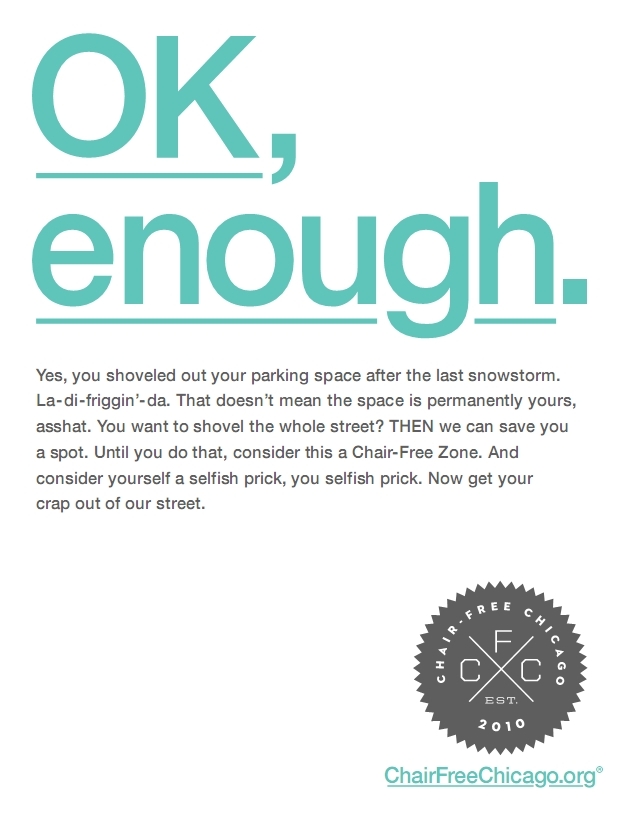
This campaign is sure to spark some street fighting. In cities hit by heavy winter weather, calling “dibs” on a just shoveled parking space is common practice. But it’s not legal. And this new campaign from Chair Free Chicago aims to put an end to the practice of placing chairs in parking spaces as a means to claim them.

Chair Free Chicago has published three signs Chicagoans can download and place in shoveled spaces to make it known saving (hogging?) parking spaces is not appreciated.

Signs range in tone from the apologetically admonishing Minneapolis Mad (“It’s just so gosh darn snowy here in Chicago, if everyone started saving spaces, why, we wouldn’t have anywhere to park!”) to the more aggressive New York Mad (“Consider yourself a selfish prick, you selfish prick.”). There’s even an option for those who believe actions speak louder than words (“Free! Please take me home, I’m all yours.”).

Our favorite is the New York version which drops “asshat” into the copy.

Picture of Steve Hall

Steve Hall

RECENT ARTICLES

TRENDING AROUND THE WEB

8 things people who work best with music on have in common

8 things people who work best with music on have in common

Hack Spirit

7 things people who hit snooze five times a morning have in common

7 things people who hit snooze five times a morning have in common

Hack Spirit

7 things people who work with their hands understand that office workers rarely do

7 things people who work with their hands understand that office workers rarely do

Hack Spirit

7 things decisive people do differently than people who are just impulsive

7 things decisive people do differently than people who are just impulsive

Hack Spirit

8 things people who give thoughtful gifts pay attention to all year

8 things people who give thoughtful gifts pay attention to all year

Hack Spirit

Greif and Gleason’s 1980 research on how children learn politeness routines found that young children almost never say “please” or “thank you” spontaneously, they say it because a parent prompts them with “what do you say?” dozens of times a week, meaning the reflex adults later display without thinking twice was built through years of someone else’s prompting long before it became automatic.

Greif and Gleason’s 1980 research on how children learn politeness routines found that young children almost never say “please” or “thank you” spontaneously, they say it because a parent prompts them with “what do you say?” dozens of times a week, meaning the reflex adults later display without thinking twice was built through years of someone else’s prompting long before it became automatic.

Global English Editing