Why Advertising Will Never Portray Reality

julia-roberts-02-500x375.jpg

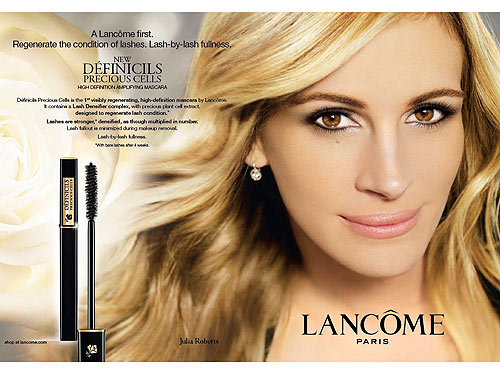
In the U.K., where the ever watchful, hawk-eyed Advertising Standards Authority keeps things in check, making a person better looking than they do in real life is now grounds for having your ad banned. L’Oreal has been told to pull a campaign featuring Julia Roberts and Christy Turlington because the images were “overly airbrushed.” Not sure anyone literally airbrushes anymore but let’s not quibble.

Liberal Democrat MP Jo Swinson made the original complaint to the ASA saying the campaign consisted of “overly perfected and unrealistic images” and that the images were “not representative of the results the product could achieve.” The campaign was deemed to have stepped outside the ASA’s guidelines for exaggeration.

Let’s be clear, Julia Roberts is beautiful “airbrushed” or not. That’s not the issue. The issue centers on a debate that has raged within advertising since the industry formed. And it has to do with aspiration.

Central to advertising’s mission – aside from getting people to buy stuff – is to motivate them to aspire to something greater. In other words, if only they used Lancome, they could be as beautiful and as successful as Julia Roberts. It’s a common tactic used in many aspects of life. If you just use this/do that, you’ll be so much better at this or that.

The problem, of course, is that it paints a picture that’s unrealistic and unachievable. And when women or men attempt to alter their God-given looks by buying these products thinking they will miraculously transform themselves into Julia Roberts – and they can’t – it becomes a little depressing.

On the flip side, one could argue there’s nothing wrong with encouraging people to aspire to something greater whether it’s smoother skin, stronger muscles, a healthier diet or a better car. People, for the most part, like to be motivated to achieve greater things in life. If, all of a sudden, marketers agreed to show “regular” people with “regular” things in all of their advertising, it wouldn’t be a stretch to assume a certain percentage of people would just throw their arms up and say, “Why would I want to look like her? She’s so regular. I don’t need to buy that product.” No marketer wants anyone to come away from an ad thinking like that.

And so marketers continue to push the boundaries. Everyone wants to look hot, right? So let’s only put hot people in our ads, tell them our product will make them look this hot and they will trip over themselves running to Walmart to buy pallet-loads of our product. Right?

As much as we all want to “do the right thing,” does anyone really think any marketer, apart from a temporary stunt (think Dove), is ever going to completely alter every aspect of their advertising so that it only reflects “average” people?

Humans don’t settle. We never will. Why would we ever settle for “average?” Advertising will always be aspirational and, as such, will always push the boundaries of what’s realistic.


Picture of Steve Hall

Steve Hall

RECENT ARTICLES

TRENDING AROUND THE WEB

I’m 65 and I sat across from my wife at dinner last Thursday and she said ‘you haven’t been happy in years’ — and the worst part wasn’t that she was right, it was that I’d convinced myself nobody had noticed

I’m 65 and I sat across from my wife at dinner last Thursday and she said ‘you haven’t been happy in years’ — and the worst part wasn’t that she was right, it was that I’d convinced myself nobody had noticed

Global English Editing

Psychology says people who feel more energetic as they age have usually made one quiet internal shift that changes everything. They stopped bracing. Their nervous system moved from chronic vigilance to genuine safety, and the body responds to that transition with energy it had been spending on survival.

Psychology says people who feel more energetic as they age have usually made one quiet internal shift that changes everything. They stopped bracing. Their nervous system moved from chronic vigilance to genuine safety, and the body responds to that transition with energy it had been spending on survival.

Global English Editing

Psychology says people who constantly interrupt conversations aren’t rude or self-centered by nature—their brain processes connection as something that has to be seized before it disappears, and that fear usually has a very specific origin

Psychology says people who constantly interrupt conversations aren’t rude or self-centered by nature—their brain processes connection as something that has to be seized before it disappears, and that fear usually has a very specific origin

Global English Editing

I’m 38 and I realized last month that I have two hundred contacts in my phone and not a single person I could call at 2 AM without feeling like I was being a burden — and that math broke something in me

I’m 38 and I realized last month that I have two hundred contacts in my phone and not a single person I could call at 2 AM without feeling like I was being a burden — and that math broke something in me

Global English Editing

Psychology says the reason most people never become who they want to be isn’t lack of discipline or willpower — it’s that they’re still performing for an audience that stopped watching years ago

Psychology says the reason most people never become who they want to be isn’t lack of discipline or willpower — it’s that they’re still performing for an audience that stopped watching years ago

Global English Editing

Psychology says a woman who has lost her joy doesn’t fall apart loudly—she starts using a specific set of 8 quiet phrases that sound like she’s fine and mean something else entirely

Psychology says a woman who has lost her joy doesn’t fall apart loudly—she starts using a specific set of 8 quiet phrases that sound like she’s fine and mean something else entirely

Global English Editing