
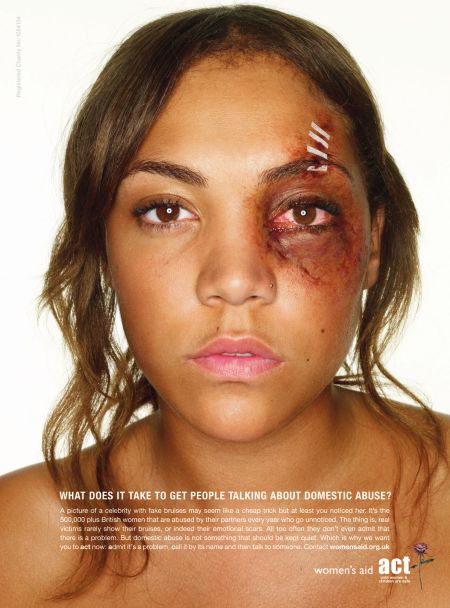
Women’s Aid Paints Domestic Violence on Famous Faces

womens_aid.jpg

We’ve seen plenty of domestic violence ads, but this campaign actually makes us cringe. For Women’s Aid, agency Grey London paints bruises onto celebrity faces and plasters them far and wide, hoping people would look, recognize, gasp in horror and decide to get comfortable with talking about their own secret bruises.

Granted there are some conversations that started out taboo and are now part of the public tell-all, like routine plastic surgery. But domestic violence is a deeply personal, humiliating affair, almost always entangled in feelings of love, loyalty and fear of stigma. We doubt any one series of visually traumatizing campaigns will help start a casual discourse about it in a public space. And in the States, you actually do need to have a bruise before you can even report anything. Kind of defeats the purpose, right?

AdPunch has more images if you want to take a look.

Picture of Steve Hall

Steve Hall

RECENT ARTICLES

TRENDING AROUND THE WEB

Psychology says people who triple-check that they locked the door aren’t paranoid — they’re carrying hypervigilance learned when home security was genuinely their responsibility and a single mistake could have serious consequences

Psychology says people who triple-check that they locked the door aren’t paranoid — they’re carrying hypervigilance learned when home security was genuinely their responsibility and a single mistake could have serious consequences

Global English Editing

Psychology says people who constantly steer every conversation back to themselves aren’t narcissists — they’re operating from a deep belief that their experiences are the only currency they have to offer in relationships

Psychology says people who constantly steer every conversation back to themselves aren’t narcissists — they’re operating from a deep belief that their experiences are the only currency they have to offer in relationships

Global English Editing

Psychology says the reason lower-middle-class people always overpack for trips isn’t anxiety — it’s a form of contingency thinking developed by people who grew up in households where forgetting something wasn’t a minor inconvenience but a problem with no budget to solve

Psychology says the reason lower-middle-class people always overpack for trips isn’t anxiety — it’s a form of contingency thinking developed by people who grew up in households where forgetting something wasn’t a minor inconvenience but a problem with no budget to solve

Global English Editing

The people who genuinely light up a room aren’t always the loudest or the funniest — they’re the ones who make you feel like what you just said actually mattered, and that kind of attention is so rare now that it feels almost shocking when you receive it

The people who genuinely light up a room aren’t always the loudest or the funniest — they’re the ones who make you feel like what you just said actually mattered, and that kind of attention is so rare now that it feels almost shocking when you receive it

Global English Editing

The loneliest boomers in retirement aren’t those who live alone — they’re the constant critics whose families still show up out of obligation but have emotionally detached years ago

The loneliest boomers in retirement aren’t those who live alone — they’re the constant critics whose families still show up out of obligation but have emotionally detached years ago

Global English Editing

Psychology says people who keep reading the same book over and over aren’t stuck — they’re returning to a version of themselves preserved in those pages, from a time when their inner life felt richer than their current daily routine allows

Psychology says people who keep reading the same book over and over aren’t stuck — they’re returning to a version of themselves preserved in those pages, from a time when their inner life felt richer than their current daily routine allows

Global English Editing











