Why Your Emails Should Be Designed For Mobile [Infographic]

email_responsive_design.png

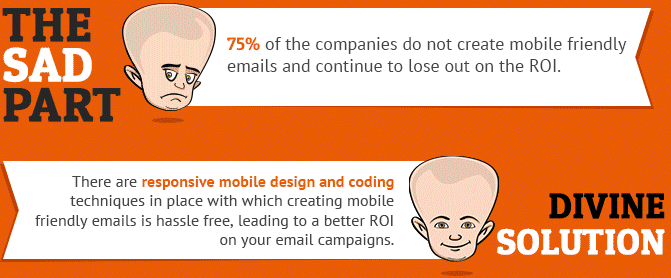
Did you know that 75% of the companies do not optimize email for mobiles yet? With 43% of the people now reading and responding emails through mobiles — a figure that is expected to hit 50% in 2013 — coupled with the fact 97% of the people view emails once, it becomes clear marketers should design emails to render properly on mobile devices.

Check out this infographic that’s packed with charts and graphs that share how mobile is permeating the email experience.

responsive-email-design-mobile-templates.gif

Picture of Steve Hall

Steve Hall

RECENT ARTICLES

TRENDING AROUND THE WEB

7 signs you’re becoming more content with your life, even if nothing dramatic has changed

7 signs you’re becoming more content with your life, even if nothing dramatic has changed

Hack Spirit

People who can tell the difference between feeling disappointed, resentful, and humiliated instead of just calling it all bad recover from stressful days faster and are less likely to drink to cope

People who can tell the difference between feeling disappointed, resentful, and humiliated instead of just calling it all bad recover from stressful days faster and are less likely to drink to cope

Global English Editing

8 things parents need to stop doing once their children become adults

8 things parents need to stop doing once their children become adults

Hack Spirit

9 habits of retirees who built a life they actually look forward to

9 habits of retirees who built a life they actually look forward to

Hack Spirit

7 things parents do that make their adult children feel like guests in their own family home

7 things parents do that make their adult children feel like guests in their own family home

Hack Spirit

“At least it’s not worse” is meant as comfort, but psychologists who study what’s become known as toxic positivity have found that skipping straight to the silver lining, before someone’s felt heard, tends to make them talk less about what’s actually bothering them, not more.

“At least it’s not worse” is meant as comfort, but psychologists who study what’s become known as toxic positivity have found that skipping straight to the silver lining, before someone’s felt heard, tends to make them talk less about what’s actually bothering them, not more.

Global English Editing