Why Facebook Privacy Concerns Will Not Hinder Growth

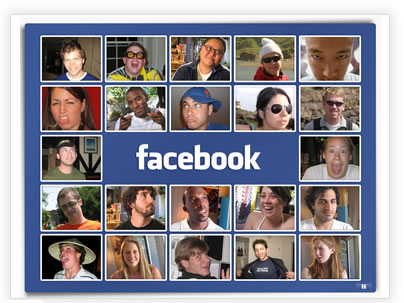
facebook-smileys.jpg

Facebook, pure and simple, is a means for people to stay in touch with people. And these people, as we have historically seen, don’t care all that much about privacy issues. Some have said Facebook will lose members over these and other privacy issues. I would disagree. Facebook is not going to lose any members. That is, perhaps, until the next best thing makes its debut. But it won’t be privacy concerns that kill Facebook. Not in my opinion.

Some have been miffed by the recent changes Facebook made regarding the automatic sharing of what you read and it’s a valid concern. But it won’t be long before Facebook plugs that hole. Or at least offers a setting to control it. But even if they don’t, I still stand by my opinion – and it is just that, an opinion – that Facebook will continue to grow.

Perhaps this example will shed some light on my opinion. Let’s for a minute liken Facebook to the cell phone. It’s no secret many studies have indicated the use of a cell phone can cause brain cancer. Believe these studies or not, they are out there. Has it had any effect at all on cell phone use? None whatsoever. Now take the far less life threatening privacy issues of Facebook. They simply are not a powerful enough motivator to make people quit. Why? Because people like to stay connected. And once they get used to doing so online, they just aren’t going to stop – even if they do happen to read an article about porn and it ends up on their profile.

Again, just my opinion.

Some have said the new Timeline, once unleashed to the masses, will cause people to freak out and quit. They may. For a few days. People don’t like change. And Timeline is a very big change. But it is a good change. A change that makes Facebook more usable and useful and actually builds a stronger bond between the user and Facebook because Timeline is one’s life effortlessly digitized and organized.

There will always be people who won’t share things with others but take the simple love of a scrapbook or a high school yearbook. People love nostalgia; the ability to go back in time and relive memorable moments in life. This is what Facebook Timeline does. It gathers up everything you’ve ever posted as well as allows you to add anything you like prior to the time Facebook existed. For the obsessive, this could mean the uploading of one’s entire life from birth present.

No doubt Timeline and all that is Facebook won’t be for everyone. But, for now, its the mother of all human connection. And a few people freaking out over privacy concerns isn’t going to affect great aunt Myrtle’s use of Facebook to connect with her nieces and nephews.


Picture of Steve Hall

Steve Hall

RECENT ARTICLES

TRENDING AROUND THE WEB

The Boomer generation that could sit through a three-hour family dinner without once reaching for a screen developed a tolerance for unstructured time that most people under 40 now medicate, distract, or schedule away—and behavioral scientists say that tolerance is one of the strongest predictors of emotional stability in later life

The Boomer generation that could sit through a three-hour family dinner without once reaching for a screen developed a tolerance for unstructured time that most people under 40 now medicate, distract, or schedule away—and behavioral scientists say that tolerance is one of the strongest predictors of emotional stability in later life

Global English Editing

I’m 73 and the thing that keeps me up at night isn’t fear of dying—it’s the possibility that my children will clean out this house in a weekend and not understand that every drawer, every shelf, every pile they’ll throw away was a sentence in a conversation I was trying to have with them

I’m 73 and the thing that keeps me up at night isn’t fear of dying—it’s the possibility that my children will clean out this house in a weekend and not understand that every drawer, every shelf, every pile they’ll throw away was a sentence in a conversation I was trying to have with them

Global English Editing

I’m 63 and I nursed other people’s pain for forty-four years and the thing I never told anyone is that I learned how to hold space for everyone else’s suffering by completely forgetting that mine was supposed to count too

I’m 63 and I nursed other people’s pain for forty-four years and the thing I never told anyone is that I learned how to hold space for everyone else’s suffering by completely forgetting that mine was supposed to count too

Global English Editing

8 things about my husband I only understood after forty years of marriage—and wished I’d known by year five

8 things about my husband I only understood after forty years of marriage—and wished I’d known by year five

Global English Editing

The sad truth why adult children slowly stop sharing real things with their parents has nothing to do with distance or busy schedules—it’s that somewhere in their 30s they realized their parent would either worry too much, give advice they didn’t ask for, or make it about themselves, and the silence was easier than managing any of those three responses

The sad truth why adult children slowly stop sharing real things with their parents has nothing to do with distance or busy schedules—it’s that somewhere in their 30s they realized their parent would either worry too much, give advice they didn’t ask for, or make it about themselves, and the silence was easier than managing any of those three responses

Global English Editing

Nobody prepares you for the loneliness of being well-married. Not unhappy enough to leave, not connected enough to stop aching, just existing in the strange middle territory where everything is fine and fine is the loneliest word in the English language

Nobody prepares you for the loneliness of being well-married. Not unhappy enough to leave, not connected enough to stop aching, just existing in the strange middle territory where everything is fine and fine is the loneliest word in the English language

Global English Editing