“Was all this made from your imagination?”
– A line among lines from The Great Gatsby
3D is dead.
I know, I know that’s a big statement for a 3D director to make. What I mean to say is 3D as a movie gimmick is dead.
That’s the impression I got walking away from an opening night showing of The Great Gatsby in 3D. Director Baz Luhrmann’s re-imagination of Fitzgerald’s well-known novel is out this weekend and it holds some really interesting secrets for creative directors. I won’t get into a flat out review of the film itself, except to say it sparked a whole lot of discussion from urban theatregoers as they exited the multiplex.
I had a few discussions myself, the biggest of which continues to be “what an interesting thing Luhrmann has done with the film.” That interesting thing is to attempt to advance his unique approach to cinematic storytelling by integrating a few new tools with his considerable arsenal.
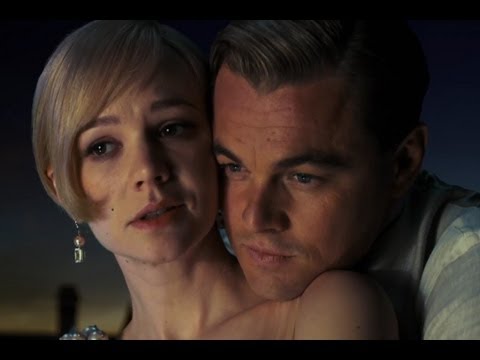
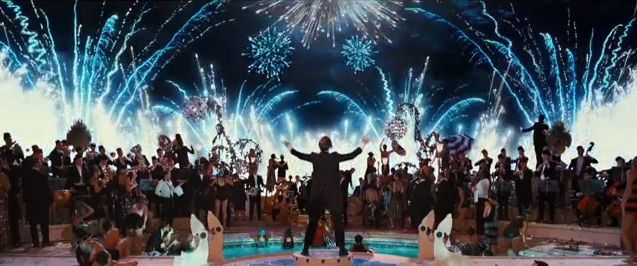
“Integrating.” That’s the right word. The Great Gatsby shows off an integrated approach to film direction. His signature smashing together of modern soundtrack and period piece is on full display. The Roaring ’20s has never felt so modern. The film’s style is drenched with eye-popping colour and frames that feel like they were photographed with the most intricate of lighting. He even adds layers of text and image throughout the film in ways that are familiar to television audiences, but still foreign to most films.
Then there’s the 3D, a tool that also gets the integrated treatment in the film. When you go to see most 3D films these days, you know that 3D is going to try to be an extra star cast member. It’s a big gimmick that makes Iron Man 3 more explode-y and Star Trek Into Darkness more spacey. It’s different here. The Great Gatsby has been designed to be a blockbuster for grown ups, and as such, the 3D feels integrated in the same way Luhrmann’s other approaches feel integrated.
There are just a handful of shots that make you think “oh wow, look at the 3D.” Instead, the entire film just feels dimensional, like you’re experiencing storytelling in a new and different way. Luhrmann’s entire bag of tricks is on display here and 3D plays along really, really well. Watching the characters walk through the riot of color in Times Square is immensely satisfying. The party and dance scenes (oh yes, there is dance) feel like you’re experiencing, rather than simply watching an entire world.
Taken as a whole, The Great Gatsby is a careening, fascinating attempt to recast the way we can tell stories. Does it work? Yes … and no. To me, the film feels like an artist attempting to understand a subject. In lucid moments, it works spectacularly. In other places, it’s up to the traditional techniques of acting, pacing and drama to carry the story. Ultimately, the film demands to be seen by creatives as a way to inspire new thinking about everything from sound and color to the most grown up use of 3D in film yet.
Luhrmann shows us that 3D can be so much more than a catchy way to attract audiences. It’s a way to create a visual playground that engages in new and startling ways. He may have tried to kill off 3D as a gimmick, but in doing so, he’s shown that it can be an important, integrated way to tell a story. From this perspective, The Great Gatsby isn’t just another summer blockbuster, it’s a landmark film that visual storytellers need to see. My takeaway? Every Creative Director needs to see this film in 3D.
This guest post was written by James Stewart, a director with TateUSA and founder of Geneva Film Co. He is a six-time speaker at Cannes Lions and presented at TED2011 and TED2013. His new short film Foxed! opens theatrically in front of Storm Surfers 3D on June 28.
Jack Dorsey follows him on twitter. @jamesstewart3D