Was Hiring Ted Williams a Smart Choice For Kraft?

kraft_ted_williams.jpg

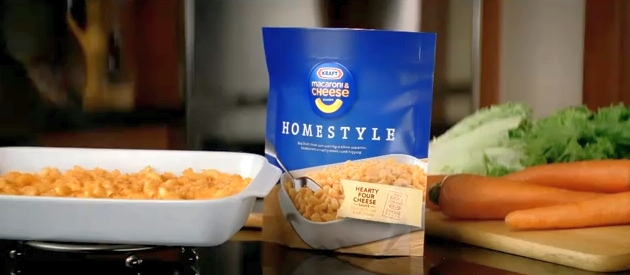
Branding consultant Rob Frankel isn’t a fan of Crispin Porter + Bogusky’s use of Ted Williams for its client Kraft. If you recall, Ted Williams was the homeless man who found fame when, earlier this month, it was discovered he had the perfect announcer voice in a Columbia Dispatch video.

While the new Kraft Macaroni & Cheese commercial has received 933,000 views since it hit YouTube January 7, Frankel thinks the whole thing is just another opportunistic agency ploy, telling Mashable, “It’s clearly another one of those opportunistic stunts by creatively bankrupt agencies who jump on any trend they think can take them to the top of a Twitter trend.”

But shouldn’t any good marketing program avail itself of opportunities just like this? Is there any harm in riding the publicity train for commercial gain? After all, that’s a big part of marketing; getting notoriety which, one hopes, translates into sales.

Yes, Ted Williams is a blip on the radar for Kraft. But where would Kraft Macaroni and Cheese be without Williams? Ask yourself this; when was the last time a staple as mundane as Kraft Macaroni and Cheese was at the forefront of anything?


Picture of Steve Hall

Steve Hall

RECENT ARTICLES

TRENDING AROUND THE WEB

Psychologists say the bond between a person and the dog that sleeps in their bed isn’t comparable to human attachment. It’s actually more stable, because the dog never withdraws affection as punishment, never keeps score, and never makes closeness conditional on performance.

Psychologists say the bond between a person and the dog that sleeps in their bed isn’t comparable to human attachment. It’s actually more stable, because the dog never withdraws affection as punishment, never keeps score, and never makes closeness conditional on performance.

Global English Editing

The generation that performed stability even when they were barely holding on — boomers who kept immaculate homes, perfect lawns, and polished images while quietly falling apart — is finally putting down the mask, and this is what it looks like

The generation that performed stability even when they were barely holding on — boomers who kept immaculate homes, perfect lawns, and polished images while quietly falling apart — is finally putting down the mask, and this is what it looks like

Global English Editing

Psychology says adults with no close friends aren’t broken or antisocial — many of them simply learned early that the moment you show someone who you really are, that’s when they leave

Psychology says adults with no close friends aren’t broken or antisocial — many of them simply learned early that the moment you show someone who you really are, that’s when they leave

Global English Editing

Psychology says people who constantly try to become better versions of themselves aren’t actually growing — they’re running from a core belief that who they are right now isn’t enough, and that anxiety prevents the very self-acceptance that real growth requires

Psychology says people who constantly try to become better versions of themselves aren’t actually growing — they’re running from a core belief that who they are right now isn’t enough, and that anxiety prevents the very self-acceptance that real growth requires

Global English Editing

Research suggests that people who handwrite lists and people who use phone apps process their entire day differently. The paper list writers tend to plan from internal cues while the app users increasingly rely on external prompts, and over decades that difference quietly reshapes how autonomous a person feels inside their own life.

Research suggests that people who handwrite lists and people who use phone apps process their entire day differently. The paper list writers tend to plan from internal cues while the app users increasingly rely on external prompts, and over decades that difference quietly reshapes how autonomous a person feels inside their own life.

Global English Editing

Psychology says people who instinctively push their chair in when they leave a table aren’t just being polite – they grew up in households where someone always had to clean up after everyone else, and they never forgot what it felt like to be that person

Psychology says people who instinctively push their chair in when they leave a table aren’t just being polite – they grew up in households where someone always had to clean up after everyone else, and they never forgot what it felt like to be that person

Global English Editing