
Twitter Testing Contextual Advertising System

saul_hansell_twitter_test_tweet.jpg

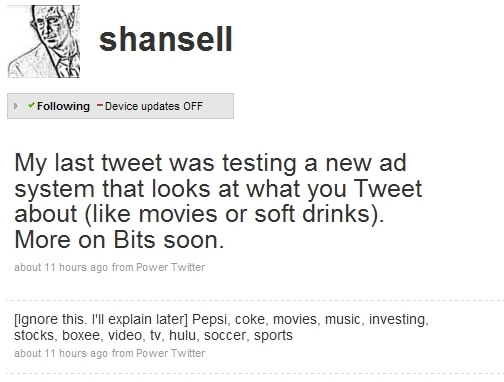
Following leaked revelations Twitter will take in as much as $20 million or so per month by the fourth quarter of 2010, it appears the company is testing a new contextual advertising system that will target ads to people based upon the contents of their tweets.

Saul Hansell of the New York Times tweeted yesterday he’s apparently in on the test and will have more to report at a later date.

Inline contextual advertising on Twitter might not be such a bad thing. If it’s relevant. If it’s not too frequent. And if it actually serves a person’s needs. Time and testing will address that but one thing is clear. Either through fees, ad revenue or some other source, Twitter does need to start making money. Even the best services can’t live on VC money indefinitely.

Twitter, of course, states all this leaked information is inaccurate and unofficial. But, there may be a reality TV show in the works called Final Tweet. Seriously. That has to be a joke.


Picture of Steve Hall

Steve Hall

RECENT ARTICLES

TRENDING AROUND THE WEB

9 things deeply curious people do that make ordinary days feel interesting

9 things deeply curious people do that make ordinary days feel interesting

Hack Spirit

The difference between editing and proofreading (and why it matters for your work)

The difference between editing and proofreading (and why it matters for your work)

Global English Editing

8 small habits of people born in the 60s and 70s that make them wonderful neighbors

8 small habits of people born in the 60s and 70s that make them wonderful neighbors

Hack Spirit

7 quiet signs someone has made real peace with getting older

7 quiet signs someone has made real peace with getting older

Hack Spirit

8 things emotionally mature people do when an old friend disappoints them

8 things emotionally mature people do when an old friend disappoints them

Hack Spirit

Why we say one thing and mean another — the linguistics and cognition of the intent–expression gap

Why we say one thing and mean another — the linguistics and cognition of the intent–expression gap

Global English Editing










