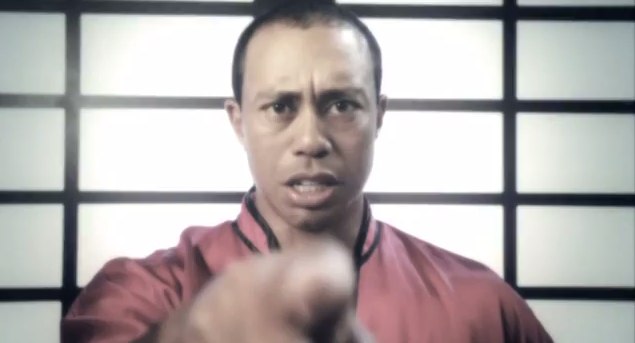
Tiger Woods, Shaquille O’Neal Battle Kung Fu-Style

tiger_woods_ea_sports_pga.jpg

How quickly we forget. Remember Tiger Woods? Yea, the golfer dude that cheated on his wife life 13 times. Everyone disowned him right? Well, he’s back and can be seen in this funny Heat-created ad for EA Sports’ Tiger Woods PGA Tour 13. Called Duel of the Masters, Tiger and Shaquille O’Neal duel each othee King Fu style complete with badly-dubbed dialog.


Picture of Steve Hall

Steve Hall

RECENT ARTICLES

TRENDING AROUND THE WEB

I’m 73 and my husband leaves every surface destroyed when he cooks and then cleans it all afterward in one heroic effort — and I clean as I go and present a meal from a kitchen that looks like nobody used it — and we’ve been having the same argument about this for 44 years without realizing that it’s not about dishes, it’s about two fundamentally different philosophies of how to move through chaos, and the kitchen is just the room where the philosophies collide three times a day

I’m 73 and my husband leaves every surface destroyed when he cooks and then cleans it all afterward in one heroic effort — and I clean as I go and present a meal from a kitchen that looks like nobody used it — and we’ve been having the same argument about this for 44 years without realizing that it’s not about dishes, it’s about two fundamentally different philosophies of how to move through chaos, and the kitchen is just the room where the philosophies collide three times a day

Global English Editing

Psychology says parents who feel their adult children don’t love them aren’t being dramatic — they’re detecting the difference between maintenance-level contact and genuine emotional investment, and that distinction becomes unbearable once you finally notice it

Psychology says parents who feel their adult children don’t love them aren’t being dramatic — they’re detecting the difference between maintenance-level contact and genuine emotional investment, and that distinction becomes unbearable once you finally notice it

Global English Editing

Psychologists explain that people who have to jiggle the door handle after locking it aren’t paranoid — they’re compensating for the fact that procedural memory doesn’t create the same confidence as episodic memory, which is why we trust what we just witnessed more than what we just did

Psychologists explain that people who have to jiggle the door handle after locking it aren’t paranoid — they’re compensating for the fact that procedural memory doesn’t create the same confidence as episodic memory, which is why we trust what we just witnessed more than what we just did

Global English Editing

The generation that was told they could have it all is now watching its childless members age into a healthcare system, inheritance framework, and social safety net that was built entirely around the assumption that everyone would have someone younger who cared enough to make the phone calls

The generation that was told they could have it all is now watching its childless members age into a healthcare system, inheritance framework, and social safety net that was built entirely around the assumption that everyone would have someone younger who cared enough to make the phone calls

Global English Editing

Research suggests adults who received minimal affection as children often become one of two things — either the most physically affectionate person in any room, overcompensating with a warmth they’re terrified of withholding, or the most physically reserved, maintaining a distance they don’t want but can’t override — and both responses are survival adaptations to the same wound, and neither one feels natural because neither one is, they’re both translations of an experience that was never given its original language

Research suggests adults who received minimal affection as children often become one of two things — either the most physically affectionate person in any room, overcompensating with a warmth they’re terrified of withholding, or the most physically reserved, maintaining a distance they don’t want but can’t override — and both responses are survival adaptations to the same wound, and neither one feels natural because neither one is, they’re both translations of an experience that was never given its original language

Global English Editing

Psychology says people who grew up with very little affection don’t become cold — they become hyper-competent, because when love isn’t freely given, achievement becomes the only language they know for earning value

Psychology says people who grew up with very little affection don’t become cold — they become hyper-competent, because when love isn’t freely given, achievement becomes the only language they know for earning value

Global English Editing