Study Proves Americans Have Forgotten Tiger Woods Cheated

wise_window_mobi_tiger_woods.jpg

Click. Make Me Big

Don’t you love when a company jumps on a hot topic for their own gain? Hey, who can blame? After all, that’s what it’s all about, right? Call it opportunistic marketing or whatever you want but everyone does it. Including WiseWindow which is out with its latest Mass Opinion Business Intelligence study examining the public’s sentiment towards Tiger Woods.

Mostly, the study set out to determine how the man is rehabilitating his public image and whether or not his sponsorship value can make a come back. Using web crawling techniques and cloud computing rather than keyword analysis, the methodology aims to discover unsolicited opinions. Which, when you think about it, is probably a whole lot more accurate than the spastic rantings you see on Twitter.

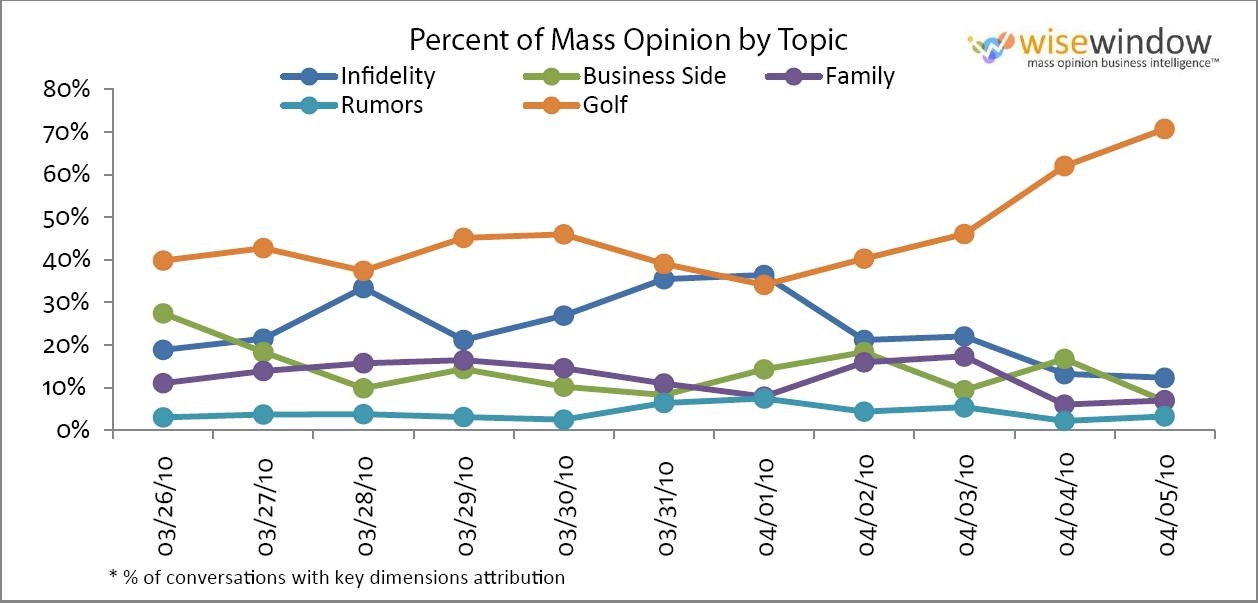
Anyway, according to MOBI findings, people are talking less about Woods’ infidelities and more about his golfing career, something Woods and his team are likely quite pleased about. But like all scandals, what’s really happening is that people are just bored with the topic and they’ve moved on. They will forget and before you know it, brands will, again, be begging Woods to pimp their products.


Picture of Steve Hall

Steve Hall

RECENT ARTICLES

TRENDING AROUND THE WEB

Psychologists explain that people who were never yelled at but always met with silence when they disappointed someone often develop a fear of calm that follows them into every adult relationship. They don’t flinch at anger. They flinch at quiet.

Psychologists explain that people who were never yelled at but always met with silence when they disappointed someone often develop a fear of calm that follows them into every adult relationship. They don’t flinch at anger. They flinch at quiet.

Global English Editing

I’m 73 and I just realized I have no close friends — not because I’m unlikeable, but because I spent forty years being pleasant to everyone and deep with no one, and now I don’t even know how to start

I’m 73 and I just realized I have no close friends — not because I’m unlikeable, but because I spent forty years being pleasant to everyone and deep with no one, and now I don’t even know how to start

Global English Editing

The difference between people who age into bitterness and people who age into warmth often comes down to one thing — Whether they treated happiness as something they deserved or something that grew naturally from how they chose to live each day

The difference between people who age into bitterness and people who age into warmth often comes down to one thing — Whether they treated happiness as something they deserved or something that grew naturally from how they chose to live each day

Global English Editing

The people who seem most at peace in their 60s and 70s didn’t find happiness by searching for it — they built lives where meaning, routine, and genuine connection left room for happiness to show up on its own terms

The people who seem most at peace in their 60s and 70s didn’t find happiness by searching for it — they built lives where meaning, routine, and genuine connection left room for happiness to show up on its own terms

Global English Editing

The generation that grew up in the 1950s and 60s wasn’t given a childhood — they were given a rehearsal for adulthood, handed responsibilities before they had finished being children, and then spent the rest of their lives wondering why they felt robbed of something they couldn’t quite name

The generation that grew up in the 1950s and 60s wasn’t given a childhood — they were given a rehearsal for adulthood, handed responsibilities before they had finished being children, and then spent the rest of their lives wondering why they felt robbed of something they couldn’t quite name

Global English Editing

The real reason boomer women who raised children, worked full-time, and cared for aging parents without complaining now struggle to accept help isn’t pride — it’s that their entire sense of worth was built around being the person who could handle everything, and slowing down feels like becoming irrelevant

The real reason boomer women who raised children, worked full-time, and cared for aging parents without complaining now struggle to accept help isn’t pride — it’s that their entire sense of worth was built around being the person who could handle everything, and slowing down feels like becoming irrelevant

Global English Editing