Show Your Dawg You’ve Got His Back.

aspca-rottweiler.jpg

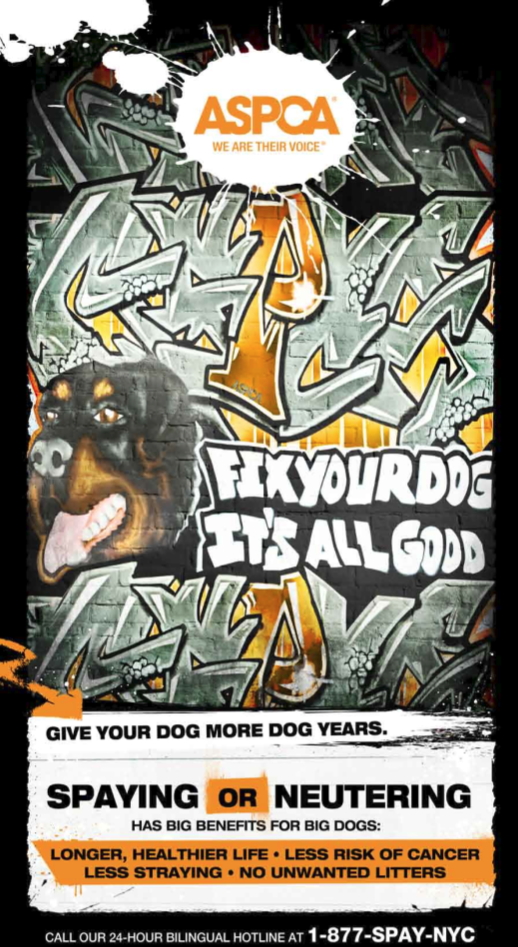
Under the wince-worthy tagline “Fix your dog, it’s all good!”, the ASPCA uses graffiti to encourage pet owners to spay or neuter their animals. See the bad-ass pitbull variant.

The campaign targets black and Hispanic inner-city male dog owners, which will probably smirk, or maybe dolefully shake their heads, when they see the earnest posters on the streets of New York. But since this is a friendly effort to encourage proper furry-friend-stewardship — and not a lamesauce rap promotion for Taco Bell — maybe they’ll cut the ASPCA some slack.

Put together by Tampa-based Pyper Paul + Kenney.

Picture of Steve Hall

Steve Hall

RECENT ARTICLES

TRENDING AROUND THE WEB

9 cities that inspired the world’s most famous novels

9 cities that inspired the world’s most famous novels

Global English Editing

People who make difficult days feel a little lighter tend to do these 8 things

People who make difficult days feel a little lighter tend to do these 8 things

Hack Spirit

Stanford researchers who tracked how people’s social circles change with age found that older adults don’t lose the ability to make friends — they simply get pickier, deliberately keeping fewer relationships that feel meaningful and letting the rest go, a shift linked to higher emotional well-being, not less

Stanford researchers who tracked how people’s social circles change with age found that older adults don’t lose the ability to make friends — they simply get pickier, deliberately keeping fewer relationships that feel meaningful and letting the rest go, a shift linked to higher emotional well-being, not less

Global English Editing

9 things lifelong readers pick up on that other people miss entirely

9 things lifelong readers pick up on that other people miss entirely

Hack Spirit

7 habits that separate quick decision-makers from chronic overthinkers

7 habits that separate quick decision-makers from chronic overthinkers

Hack Spirit

Since 2000, Northwestern Medicine has tracked 290 volunteers over age 80 using a 15-word memory test, and after 25 years the ones who still score like adults in their fifties and sixties turn out to share one habit above the rest: close, frequent contact with other people.

Since 2000, Northwestern Medicine has tracked 290 volunteers over age 80 using a 15-word memory test, and after 25 years the ones who still score like adults in their fifties and sixties turn out to share one habit above the rest: close, frequent contact with other people.

Global English Editing