


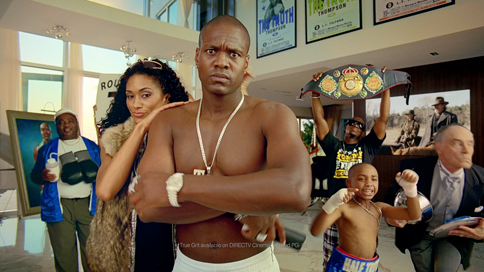
As you may have heard, DirecTV has pulled its latest ad featuring a fictional character Tommy, “The Truth” Thompson, from YouTube because the comments became a bit harsh. Central to the debate was the notion the spot contained racial overtones and glorified violence. You can view the spot below and decide for yourself.
We’re not going to debate the finer points of racism, the hypersensitivities of today’s culture nor the annoying inability of, it seems, anyone, to understand humor. Rather, we’re going to ponder the mindset of a brand that pulls content just because things get ugly.
DirecTV said the spot was pulled from YouTube because “the content of the associated posts was devolving into an R-rated dialogue.” The spot will continue to air as planned on national television.
On the one hand, an argument could be made in favor of the company disassociating itself from negative commentary it deems harmful to the brand. On the surface, this is perfectly logical. Most brands (and most people, for that matter) don’t want to be associated with content that could place them at the center of a negative spotlight. Every brand (and every person) wants to be seen in the best possible light and it’s every brand’s job (and every person’s job) to insure they are portrayed in a manner they deem positive.
Just like people, brands want to appear friendly, likable, smart and well-spoken. When a cloud of negativity surrounds a person or a brand that friendliness, likability, intelligence and proper diction is tarnished. It’s natural to disassociate oneself from negativity.
On the flip side, dissociating oneself from negativity rather than facing it head on can be seen as weak and fickle. Running from debate rather than using the surrounding negativity to further bolster and cement the positivity of one’s personality is akin to burying one’s head in the sand and hoping the controversy will blow over.
DirecTV could have taken this opportunity to enter the debate and deftly, of course, explain its position both as a brand and as a corporate citizen in relation to the conversation’s content. The brand could have both assuaged sensitivities and countered negativity with an explanation of its creative strategy and commentary on the issues raised in the comment stream. Pulling out when things heat up could be interpreted as typical brand cowardice. Too often brands run for cover rather than face debate.
This one can be argued either way. But, really, the argument is pointless. A brand, just like a person, is in control of its own destiny. We can question, comment, chastise or compliment but only the brand (or the person) can decide what’s right for them.
Though if we were to offer an opinion, we always vote for full frontal debate. An airing of the issues until all debate is politely and deftly quelled or at least until an agreement to disagree is reached among all parties involved.












