Salvation Army Places Street Signs on Homeless Homes Calling Attention to Plight of the Homless

salvation_army_canada_homeless.png

With help from Toronto agency Cossette, The Salvation Army is making sure Canadians know that no one should have to live on the streets.

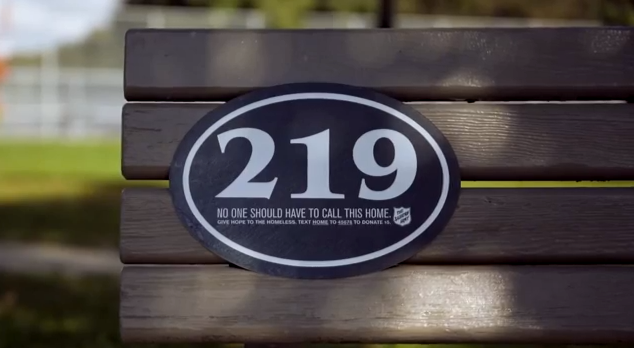
The agency has launched an outdoor campaign that encourages consumers to make donations that will be used to help the homeless. The agency placed typical neighborhood home address signs in a variety of public places where people normally eat, talk, read, relax, wait for the bus, or just hang out.

The home address signs draw attention to the fact that these same places are also locations where homeless people sleep. A headline beneath the street number reads: “No one should have to call this home.” And below this headline people are encouraged to “Give hope to the homeless” by texting a donation to The Salvation Army.

Of the work, Cosette Co-CCO Matt Litzinger said, “The problem with homelessness is that it’s often easy to ignore. We wanted to jolt the public by putting messages in places – and in a manner – that would surprise them,. Then we continue to turn that communications experience on its head by telling our audience that these same locations are also places that street people call home.”

YouTube video

Picture of Steve Hall

Steve Hall

RECENT ARTICLES

TRENDING AROUND THE WEB

The single most isolating thing about having no close friends after 60 isn’t the loneliness — it’s realizing that every system in society assumes you have someone, and when you don’t, you become functionally invisible

The single most isolating thing about having no close friends after 60 isn’t the loneliness — it’s realizing that every system in society assumes you have someone, and when you don’t, you become functionally invisible

Global English Editing

I spent my entire adult life planning for retirement and now at 65 I’m here and it feels like I’m watching a movie of someone else’s life in real-time — I know intellectually that this is my house, my wife, my days, but I can’t shake the sensation that I’m not really in it

I spent my entire adult life planning for retirement and now at 65 I’m here and it feels like I’m watching a movie of someone else’s life in real-time — I know intellectually that this is my house, my wife, my days, but I can’t shake the sensation that I’m not really in it

Global English Editing

I gave my kids everything I never had growing up and somewhere around age 63 I realized that’s exactly why they can’t appreciate it — they have no reference point for what life looks like without a parent who absorbs everything so they don’t have to

I gave my kids everything I never had growing up and somewhere around age 63 I realized that’s exactly why they can’t appreciate it — they have no reference point for what life looks like without a parent who absorbs everything so they don’t have to

Global English Editing

The loneliest people in retirement aren’t the ones without children — they’re the ones who built their entire identity around being needed and now sit in quiet houses waiting for phone calls that will never come

The loneliest people in retirement aren’t the ones without children — they’re the ones who built their entire identity around being needed and now sit in quiet houses waiting for phone calls that will never come

Global English Editing

Psychology says the reason older adults return to the music of their teens and twenties isn’t sentimentality, it’s neurological self-medication — those songs are stored in a part of the brain that bypasses current distress and delivers them directly to a period when the nervous system felt safe, and pressing play on a 1970s album is the cheapest and most effective emotional regulation tool most people over 60 have access to

Psychology says the reason older adults return to the music of their teens and twenties isn’t sentimentality, it’s neurological self-medication — those songs are stored in a part of the brain that bypasses current distress and delivers them directly to a period when the nervous system felt safe, and pressing play on a 1970s album is the cheapest and most effective emotional regulation tool most people over 60 have access to

Global English Editing

The loneliest people in most social circles aren’t the ones nobody likes – they’re the kind, reliable people everyone appreciates but nobody thinks to check on because they’ve never once indicated they might need something

The loneliest people in most social circles aren’t the ones nobody likes – they’re the kind, reliable people everyone appreciates but nobody thinks to check on because they’ve never once indicated they might need something

Global English Editing