


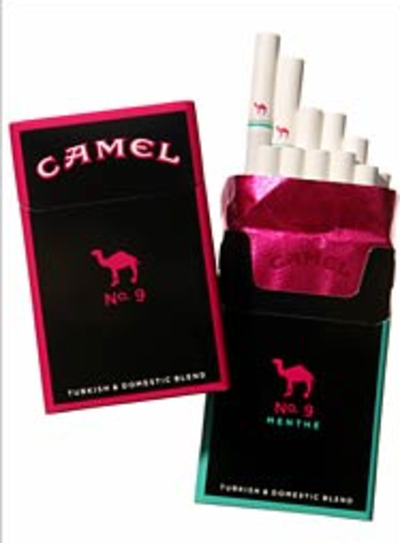
Following intense negative reaction to its Camel No. 9 campaign which likened the brand to a fashion accessory, RJ Reynolds yesterday announced it would cease all print advertising in 2008.
Downplaying the Camel No. 9 furor, R.J. Reynolds spokeswoman Jan Smith said the cut is “an effort by the company to enhance and sharpen the effectiveness and efficiency of its marketing programs.” Hmm. We just threw up…a tiny bit…in our mouth.
Getting more truthful, Smith added, “Obviously tobacco industry issues are in mind with every decision we make. A result of this is there should be less controversy over cigarette advertising in magazines and newspapers, because we won’t be doing it.”
Right. Problem solved. Except for the fact they’ll still be spending millions and billions on POP, promotions, direct mail and other forms of coercion…uh…advertising.
The American Legacy Foundation wants RJ Reynolds to go further and is asking the company to remove the Camel No. 9 from retail shelves for good.
So let’s cut through the bullshit. Smoking is addictive. RJ Reynolds knows this. Getting a person hooked on a brand at a young age increases the liklihood that person will develop an affinity with the brand for life. RJ Reynolds knows this. Kids like like fun, playful, colorful, cartoon-like things. RJ Reynolds knows this. Kids will buy fun. playful, colorful, cartoon-like things. RJ Reynolds knows this.
Being the smart (desperate?) marketer they are and in the line of fire from anti-smoking groups, RJ Reynolds does what any logical thinking marketer would do. It creates a product that is, by design, magnetic to kids. Kids buy the stuff. RJ Reynolds makes money all while talking out of both sides of their mouths regarding all the things they’re doing to prevent underage smoking while at the same time creating products the very people they shouldn’t buy will gravitate to in droves. Kids smoke. People die. RJ Reynolds washes their hands of the whole thing by pointing to the millions of dollars they spend on so-called anti-smoking efforts.
Of course if we banned cigarettes in the name of protecting people’s health, we also have to ban alcohol, caffeine, trans fats, sugar, cholesterol, cell phones, microwave ovens, high voltage power lines, hydrogenated oils, ozone-killing cars, vinyl siding (fumes are deadly if it burns), airplanes, and thousands of other things invented after about 1850 which have contributed greatly to the growth of human civilization but, some of which, have produced side effects not so good for human consumption or use.
As with everything, the answer is never an outright ban just because a particular product might be labeled bad, rather un-biased education about the effects of said product on the person consuming it. And the willingness of people to learn, take responsibility and not turn to the courts or the government every time they have a problem they need solved.
Should people be able to smoke if they want to? Yes. Should the manufacture of cigarettes be banned? No. Should cigarette companies develop brands that pray on the innocent minds of children and package their products like a toy found in a Disney store? No.
You may or may not agree with the simplicity of these questions are their answers and that’s a very good thing. This is not a black and white issue. As with most things, it’s very gray and has a lot of sides. No one is 100 percent right. No one is 100 percent wrong. There is no definitive answer to this dilemma today nor will there be in the foreseeable future. Wanna make money? Sell cigarettes. Wanna increase the chance you will die from cancer? Light up a smoke. It’s a free country. It’s your choice












