
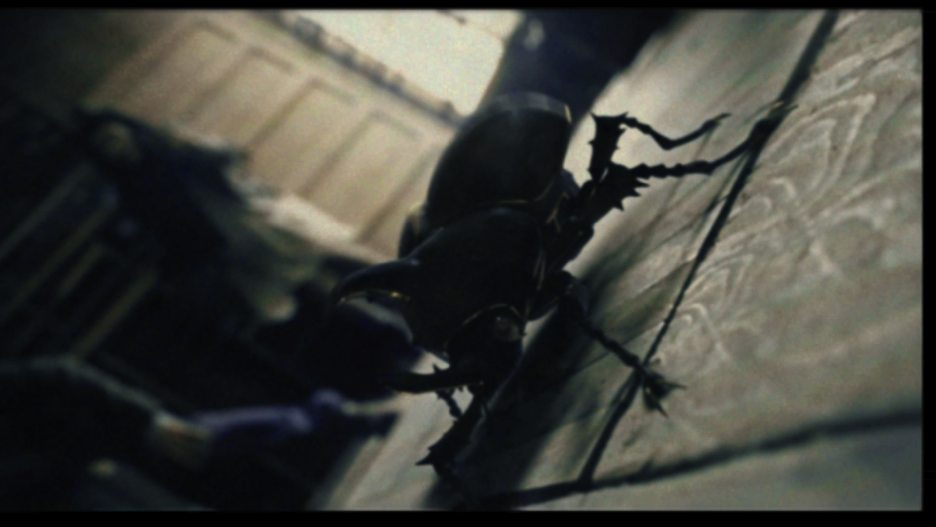
Ray-Ban Aims For Viral Success With Found Footage And Giant Bug

GS_RAYBAN_STILL%205.jpg

Found footage? Yawn. Paranormal Activity-like surprises? Yawn. Fear Factor-like scares? Yawn. Blair Witch Project-like adventure? Yawn.

Yes! It’s another “viral” video. And we know it’s viral because the production company told us so. Yup. it comes to us from Raconteur for Luxottica Group, otherwise known as Ray-Ban. Directed by William Campbell and Wil Johnson of Gentleman Scholar, the video tells the story of a couple who enters and old, rundown home (naturally) and stumbles upon a giant cocoon.

Well of course a giant bug emerges from the cocoon and scares the shit out of the couple. This being a commercial and not an actual horror flick, things don’t turn out so badly. The ugly bug that emerges from the cocoon ultimately transforms into a rather beautiful looking butterfly that then flys away.

This being a bit of a shocker-fueled viral, it can’t end before a whole bunch of cocoons drop from the ceiling just before (naturally) the camera drops to the floor and turns off.

To be fair, Campbell and Johnson sought to strike a balance between “believable and wonderful” in the spot. To make it more interesting, the directors had the couple speaking in a language that wouldn’t be easily recognizable. They tell us they found a couple who not only had on-screen chemistry but spoke Russian fluently.

And regarding the bug, they wanted to make sure that the it had scare factor but could still be grounded in reality.


Picture of Steve Hall

Steve Hall

RECENT ARTICLES

TRENDING AROUND THE WEB

I retired three years ago and I still wake up at 5:30am out of habit — but now I just sit in the kitchen drinking coffee alone because there’s nowhere to go and nobody who needs me to show up anymore

I retired three years ago and I still wake up at 5:30am out of habit — but now I just sit in the kitchen drinking coffee alone because there’s nowhere to go and nobody who needs me to show up anymore

Global English Editing

Psychology says the adults who bond most intensely with dogs share a common trait. They are high-empathy individuals who spent years managing other people’s emotions and found that the dog was the first relationship where their emotional labor wasn’t required and their presence alone was enough

Psychology says the adults who bond most intensely with dogs share a common trait. They are high-empathy individuals who spent years managing other people’s emotions and found that the dog was the first relationship where their emotional labor wasn’t required and their presence alone was enough

Global English Editing

The art of walking away from people who drain you without explaining yourself is one of the hardest skills an adult can develop—and the ones who master it all understand something about self-worth that most people learn far too late

The art of walking away from people who drain you without explaining yourself is one of the hardest skills an adult can develop—and the ones who master it all understand something about self-worth that most people learn far too late

Global English Editing

7 things I quietly stopped defending after I turned 70 — and the unexpected peace that came with each one

7 things I quietly stopped defending after I turned 70 — and the unexpected peace that came with each one

Global English Editing

Psychology says if you grew up in a household where love was unpredictable and you still managed to become a person capable of loving others steadily, you didn’t just survive a difficult childhood — you rewrote its ending without anyone helping you find the pen

Psychology says if you grew up in a household where love was unpredictable and you still managed to become a person capable of loving others steadily, you didn’t just survive a difficult childhood — you rewrote its ending without anyone helping you find the pen

Global English Editing

Psychology says the adults most likely to have no close friends by midlife aren’t the antisocial ones. They’re the high-functioning ones who became everyone’s support system and never learned how to receive the same thing back.

Psychology says the adults most likely to have no close friends by midlife aren’t the antisocial ones. They’re the high-functioning ones who became everyone’s support system and never learned how to receive the same thing back.

Global English Editing










