Pink Line Personifies Inanimate Aids

the_pink_line.jpg

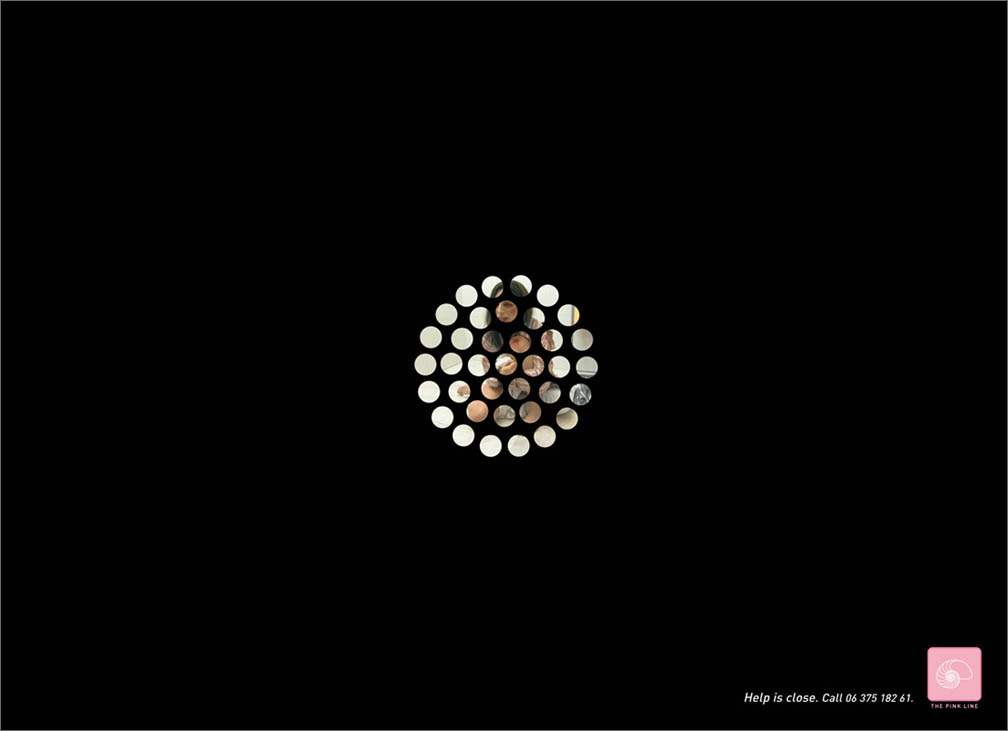
Frederik Samuel brought our attention to this piece (at left) for The Pink Line, in which we’re actually staring through the receiver holes of a telephone, at the woman on the floor. “Help is close,” the ad coaxes.

We kind of liked the esophagus concept better.

Abuse hotlines or help centers are always trying to magnify the moment you’re left bleeding on the floor. Like children gone numb to the act itself, this repetitive stance is getting tiresome – and focusing on the traumatic moment may actually miss the point.

Why can’t they make like your standard ad and put the spotlight on the vast improvement that takes place after taking action? Granted, healing is less interesting than stained linoleum, but it’s a stance that may stick out.


Picture of Steve Hall

Steve Hall

RECENT ARTICLES

TRENDING AROUND THE WEB

Psychology says the reason some people seem to intuitively understand human nature isn’t magic — it’s that they’ve spent decades paying attention to the gap between what people say and what they actually do

Psychology says the reason some people seem to intuitively understand human nature isn’t magic — it’s that they’ve spent decades paying attention to the gap between what people say and what they actually do

Global English Editing

I’m 73 and widowed and the hardest part isn’t the silence at night. It’s Sunday mornings, when the whole world seems organized around pairs and families and I’m standing in a coffee shop trying to look like someone who chose to be alone rather than someone whose person simply isn’t coming back.

I’m 73 and widowed and the hardest part isn’t the silence at night. It’s Sunday mornings, when the whole world seems organized around pairs and families and I’m standing in a coffee shop trying to look like someone who chose to be alone rather than someone whose person simply isn’t coming back.

Global English Editing

Psychology says parents who unconsciously compete with their adult child’s partner for closeness don’t realize they’re running a test the child can’t pass — because choosing the partner looks like betrayal and choosing the parent feels like regression, and the child eventually solves it by choosing distance, which is the one outcome nobody wanted but everyone’s behavior made inevitable

Psychology says parents who unconsciously compete with their adult child’s partner for closeness don’t realize they’re running a test the child can’t pass — because choosing the partner looks like betrayal and choosing the parent feels like regression, and the child eventually solves it by choosing distance, which is the one outcome nobody wanted but everyone’s behavior made inevitable

Global English Editing

Research suggests people who put items back exactly where they found them in stores — even when they decide not to buy them — aren’t just being considerate, they’re revealing a worldview where other people’s labor is visible and valuable, not invisible

Research suggests people who put items back exactly where they found them in stores — even when they decide not to buy them — aren’t just being considerate, they’re revealing a worldview where other people’s labor is visible and valuable, not invisible

Global English Editing

Psychology says the most painful form of parent-child distance isn’t estrangement, it’s functional politeness — where calls happen on schedule, visits are brief and pleasant, and nobody says anything real, because both people have silently agreed that surface-level contact is safer than the honest conversation that might break something neither of them knows how to repair

Psychology says the most painful form of parent-child distance isn’t estrangement, it’s functional politeness — where calls happen on schedule, visits are brief and pleasant, and nobody says anything real, because both people have silently agreed that surface-level contact is safer than the honest conversation that might break something neither of them knows how to repair

Global English Editing

Research suggests people who instinctively protect bugs instead of killing them have a fundamentally different relationship with power — they’ve internalized that strength means choosing restraint, not domination

Research suggests people who instinctively protect bugs instead of killing them have a fundamentally different relationship with power — they’ve internalized that strength means choosing restraint, not domination

Global English Editing