Optical Illusions Highlight Hospital’s Space Needs

bc_childrens_hospital_space.png

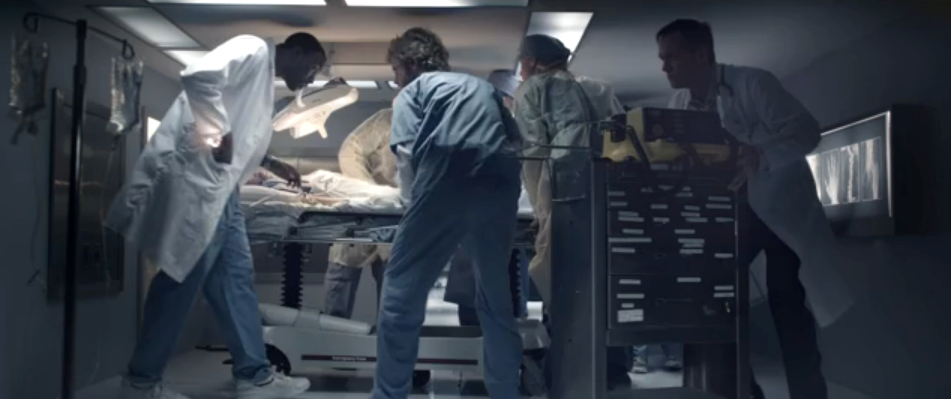
The British Columbia Children’s Hospital Foundation teamed with Dare to create a campaign to raise funds for the construction of new hospital. The chief need was more space to take care of children and the agency used an interesting optical illusion approach to conveying the message.

o create the two broadcast spots, DARE teamed up with OPC FamilyStyle director Miles Jay to develop the illusions in-camera, without special effects. To achieve the optical illusion in the first spot, “Hospital Ward”, a hospital room was created with all the walls and furniture built with skewed angles. In the “Operating Room” spot, a hallway was built that used forced perspective, an eight-foot ceilings at the far end and a five-foot ceilings in the foreground, to make it appear as though the people were getting bigger as they came towards the camera. Both sets were built in a large warehouse just outside of Toronto.

Of the concept, Dare Associate Creative Directors Addie Gillespie and Mia Thomsett said, “It wasn’t until we toured the hospital that we really understood the problem. We needed to come up with a simple way to demonstrate the hospital’s dire lack of space.”


Picture of Steve Hall

Steve Hall

RECENT ARTICLES

TRENDING AROUND THE WEB

Psychology says people who measure success by inner peace instead of outer accomplishment make fundamentally different life decisions — and they’re almost never the ones seeking validation

Psychology says people who measure success by inner peace instead of outer accomplishment make fundamentally different life decisions — and they’re almost never the ones seeking validation

Global English Editing

I had three close friends in my twenties and by my sixties they were all gone — not dead, just scattered by careers and kids and moves — and I’m sitting here realizing I never learned how to make new ones because I thought the first ones would last forever

I had three close friends in my twenties and by my sixties they were all gone — not dead, just scattered by careers and kids and moves — and I’m sitting here realizing I never learned how to make new ones because I thought the first ones would last forever

Global English Editing

I’m 63 and strangers regularly guess I’m in my early fifties — but the real reason isn’t skincare or genetics, it’s that I stopped performing a version of aging that was making me exhausted and bitter

I’m 63 and strangers regularly guess I’m in my early fifties — but the real reason isn’t skincare or genetics, it’s that I stopped performing a version of aging that was making me exhausted and bitter

Global English Editing

Behavioral scientists found that the generation gap between boomers and millennials isn’t actually about values. It’s about emotional dialect. Both generations care deeply about family, loyalty, and hard work, but they express it in languages so different that love from one side registers as control or indifference on the other

Behavioral scientists found that the generation gap between boomers and millennials isn’t actually about values. It’s about emotional dialect. Both generations care deeply about family, loyalty, and hard work, but they express it in languages so different that love from one side registers as control or indifference on the other

Global English Editing

People who constantly say ‘it’s fine’ when it clearly isn’t aren’t avoiding conflict – they learned early that expressing disappointment meant being called difficult, and silence became the only response that didn’t cost them relationships

People who constantly say ‘it’s fine’ when it clearly isn’t aren’t avoiding conflict – they learned early that expressing disappointment meant being called difficult, and silence became the only response that didn’t cost them relationships

Global English Editing

Psychology says people who save the best bite of food for last aren’t being strategic — it’s delayed gratification wired so deeply that it persists even in contexts with zero stakes, and this trait actually correlates with long-term planning ability across totally unrelated domains

Psychology says people who save the best bite of food for last aren’t being strategic — it’s delayed gratification wired so deeply that it persists even in contexts with zero stakes, and this trait actually correlates with long-term planning ability across totally unrelated domains

Global English Editing