Nissan Dives Headfirst Into Hip-Hop, Hits Head

nissan_shift_respect.jpg

It’s always a little risky when major corporations try to wedge themselves into a subculture that hasn’t invited them in.

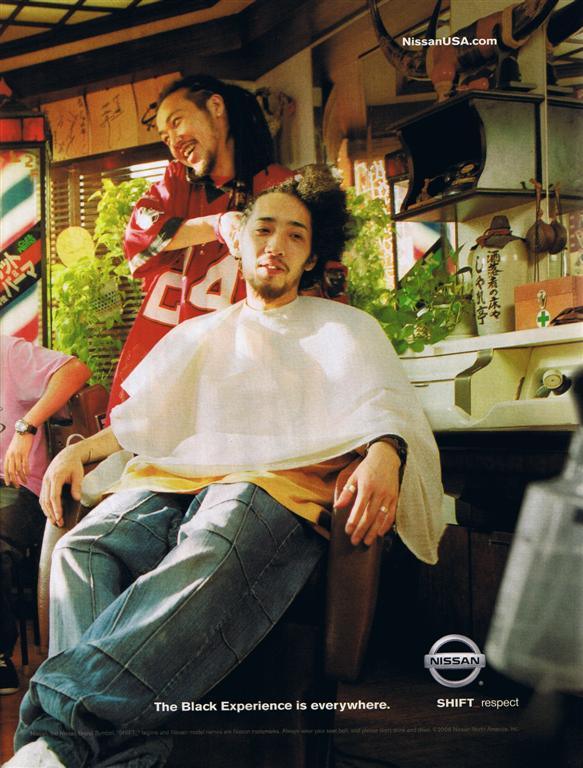
Hiphop-Ads hustles us in the direction of the latest leg of Nissan’s “SHIFT” campaign, entitled “SHIFT_Respect.” (Insert cringe here.) With a highlight on the Tokyo hip-hop subculture, the campaign aims to illustrate the iffy ethos, “The Black Experience is everywhere.”

It’s a fine line Nissan walks. “The Black Experience is everywhere”? It just pokes nerves all around – among those sensitive about what it is to be black, those who feel Asians and other non-white or black minorities do nothing but throw themselves behind majority trends, and those concerned about the commoditization of hip-hop.

Did you have to say The Black Experience is everywhere? Who knows, maybe it’s genius. At least it starts a conversation. We’ll totally ignore the fact that it’s a conversation that gets rehashed more than the sum total of celebutrash trolling bars without panties.


Picture of Steve Hall

Steve Hall

RECENT ARTICLES

TRENDING AROUND THE WEB

Research suggests the generation of self-taught workers now retiring is the last generation for whom autodidactic learning carried genuine economic power — they could enter industries without credentials, rise without degrees, and build without permission, and the closure of those pathways through credentialism means the kind of mind that built most of the infrastructure we depend on is being systematically excluded from building what comes next

Research suggests the generation of self-taught workers now retiring is the last generation for whom autodidactic learning carried genuine economic power — they could enter industries without credentials, rise without degrees, and build without permission, and the closure of those pathways through credentialism means the kind of mind that built most of the infrastructure we depend on is being systematically excluded from building what comes next

Global English Editing

I’m 73 and the most disorienting moment of my life wasn’t widowhood or retirement, it was standing in a restaurant being asked what I’d like to order and realizing I’d spent so many decades eating what was easiest, cheapest, or what everyone else wanted that I genuinely didn’t know what I liked anymore, and that small moment at a menu contained the entire story of how I lost myself

I’m 73 and the most disorienting moment of my life wasn’t widowhood or retirement, it was standing in a restaurant being asked what I’d like to order and realizing I’d spent so many decades eating what was easiest, cheapest, or what everyone else wanted that I genuinely didn’t know what I liked anymore, and that small moment at a menu contained the entire story of how I lost myself

Global English Editing

Psychology says the reason some people seem to intuitively understand human nature isn’t magic — it’s that they’ve spent decades paying attention to the gap between what people say and what they actually do

Psychology says the reason some people seem to intuitively understand human nature isn’t magic — it’s that they’ve spent decades paying attention to the gap between what people say and what they actually do

Global English Editing

I’m 73 and widowed and the hardest part isn’t the silence at night. It’s Sunday mornings, when the whole world seems organized around pairs and families and I’m standing in a coffee shop trying to look like someone who chose to be alone rather than someone whose person simply isn’t coming back.

I’m 73 and widowed and the hardest part isn’t the silence at night. It’s Sunday mornings, when the whole world seems organized around pairs and families and I’m standing in a coffee shop trying to look like someone who chose to be alone rather than someone whose person simply isn’t coming back.

Global English Editing

Psychology says parents who unconsciously compete with their adult child’s partner for closeness don’t realize they’re running a test the child can’t pass — because choosing the partner looks like betrayal and choosing the parent feels like regression, and the child eventually solves it by choosing distance, which is the one outcome nobody wanted but everyone’s behavior made inevitable

Psychology says parents who unconsciously compete with their adult child’s partner for closeness don’t realize they’re running a test the child can’t pass — because choosing the partner looks like betrayal and choosing the parent feels like regression, and the child eventually solves it by choosing distance, which is the one outcome nobody wanted but everyone’s behavior made inevitable

Global English Editing

Research suggests people who put items back exactly where they found them in stores — even when they decide not to buy them — aren’t just being considerate, they’re revealing a worldview where other people’s labor is visible and valuable, not invisible

Research suggests people who put items back exactly where they found them in stores — even when they decide not to buy them — aren’t just being considerate, they’re revealing a worldview where other people’s labor is visible and valuable, not invisible

Global English Editing