
This Internet Week coverage is brought to you by ShareThis. The best content is hand picked.
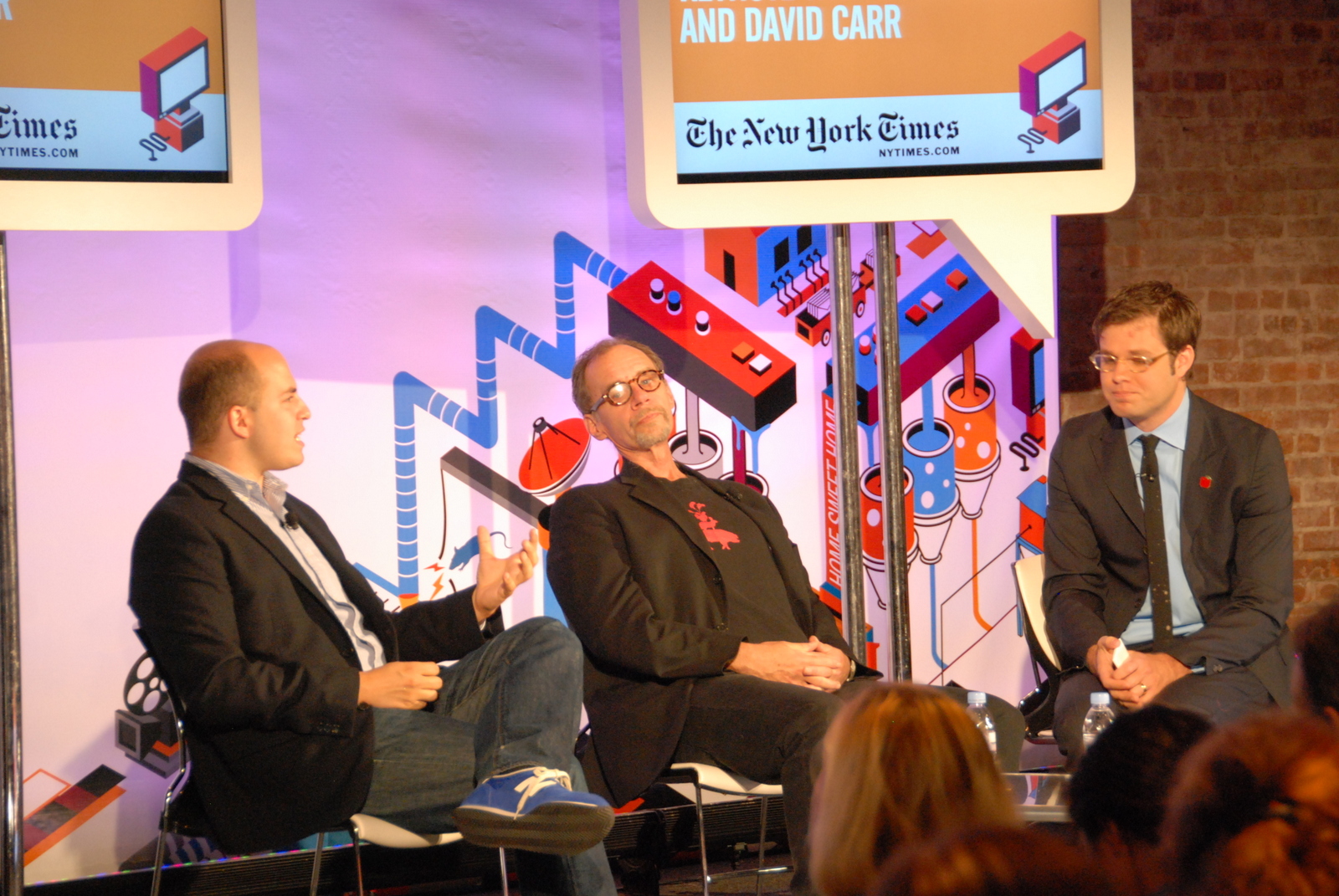
Day two of Internet Week kicked off with a panel conversation led by Internet Week Founder David-Michel Davies who interviewed New York Times writers David Carr and Brian Stelter. The three discussed the changes in publishing that have occurred over the past decade.
The conversation was an interesting, yet friendly, dichotomy of old versus new. Carr has been a journalist for many year. Stelter has been for five years of so. Carr is old school. Stelter is new school. But each have learned from one another and the two say they are each better for it.
On the topic of breaking news and defining the “moment” as it were, online publishing has made it more difficult to make a determination as to a specific moment in time. Online stories are fluid and iterate over time. Printed stories land with a discernable thud on the printing press floor.
In terms of managing the lifespan of online stories, Carr said he’s always wondering, “How do we kick the can down the road? How do we continue a stories momentum?” Both agreed it’s now harder to make a story an “event” because most stories are now fluid. They don’t have a defined end date. They evolve. Stetler added that online can play off offline and visa versa. A brief tweet can lead to a longer form printed piece and a printed piece can lead to continual online commentary.
Carr said that though there is value in breaking a story but, for the most part, the consumer doesn’t really care. All they care about is getting the facts they need at the time and place they choose to read.
Though both agreed there is a certain greater importance to a story in print (it’s final, it’s physically tangible), Carr was enthusiastic about online’s ability to serves as a sort of testing ground; a place where publishing ideas can be tested (such as some horrifically-lit videos he made in his basement which made him look like a serial killer). If they work, you continue. If they don’t you just stop.
Of Twitter, Stelter sai, “Twitter is a chat room for reporters” and Carr said, “Don’t mistake Twitter buzz for real buzz.” While both have sourced stories from Twitter, each felt it was a bit of an echo chamber with minimal effect on the net result of a story.
Of the New York Times paywall, both noted at first many reporters feared it thinking they’d be separated from their readers. But because the wall is “leaky” (readers can consume several stories per month free before paying), it hasn’t been the separating factor originally feared. In fact, it’s now greatly appreciated for the revenue it generates with almost one half million pad subscribers.
The chat was amusing but Carr, who in another scenario could have had a more caustic relationship with Stelter, refers to Stelter as his “buddy.” And Stelter’s feeling towards Carr are mutual.
This Internet Week coverage has been brought to you by ShareThis. Powering social sharing before Mark Zuckerberg graduated college.