
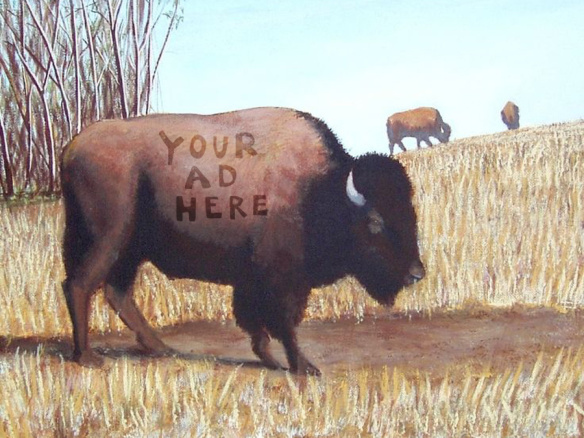
Native Ads Seen 53% More Than Banner Ads

buffalo_native_ad.jpg

A recent IPG Media Lab eye-tracking study of 4,770 consumers found native ads are seen 53% more frequently than banner ads — 4.1 times per session as compared to 2.7 for banners. As well, the study found 26% of people looked at native ads as compared to 24% who looked at editorial content.

The study’s co-author and IPG Media Labs VP of Consumer Research Strategy Kara Manatt notes native ads may be the happy medium marketers have been looking for saying, “Past research shows us that neither overly intrusive nor easily ignored ads are effective. This study validates that we are on the right path to finding that middle ground.”

And of consumer acceptance of the native advertising unit, 32% of respondents said the unit is something they’d share with a friend of family member as compared to 19% for banners. Great stat but we’d really like to meet one of those 19% who actually shared a banner!

While the advertorial has been around for a very long time, do you think it will survive and thrive in this current format?


Picture of Steve Hall

Steve Hall

RECENT ARTICLES

TRENDING AROUND THE WEB

A landmark study found that Catholic nuns who wrote sparse, simple autobiographies in their early twenties, when they entered the convent in the 1930s, were far more likely to develop Alzheimer’s disease roughly six decades later, with about 80 percent of the low-complexity writers eventually developing the disease compared to only 10 percent of those whose youthful essays were dense with ideas

A landmark study found that Catholic nuns who wrote sparse, simple autobiographies in their early twenties, when they entered the convent in the 1930s, were far more likely to develop Alzheimer’s disease roughly six decades later, with about 80 percent of the low-complexity writers eventually developing the disease compared to only 10 percent of those whose youthful essays were dense with ideas

Global English Editing

Jordan Peterson opens Rule 6 of “12 Rules for Life” by asking, “If you can’t even clean up your own room, who the hell are you to give advice to the world?” — arguing that the discipline to fix a small mess is the same discipline a marriage, a career, or a country eventually demands.

Jordan Peterson opens Rule 6 of “12 Rules for Life” by asking, “If you can’t even clean up your own room, who the hell are you to give advice to the world?” — arguing that the discipline to fix a small mess is the same discipline a marriage, a career, or a country eventually demands.

Global English Editing

9 habits that give away someone who grew up in a big family

9 habits that give away someone who grew up in a big family

Hack Spirit

Psychologists did not coin emotional intelligence until 1990, and Goleman’s book did not popularize it until 1995, so people raised between 1945 and 1975 grew up with no shared vocabulary for feelings, many still improvising one from watching, guessing, and going quiet when intimacy calls for words.

Psychologists did not coin emotional intelligence until 1990, and Goleman’s book did not popularize it until 1995, so people raised between 1945 and 1975 grew up with no shared vocabulary for feelings, many still improvising one from watching, guessing, and going quiet when intimacy calls for words.

Global English Editing

8 things dog owners do that reveal more about them than they realise

8 things dog owners do that reveal more about them than they realise

Hack Spirit

If you want your parents to feel appreciated, these 7 small gestures go a long way

If you want your parents to feel appreciated, these 7 small gestures go a long way

Hack Spirit










