
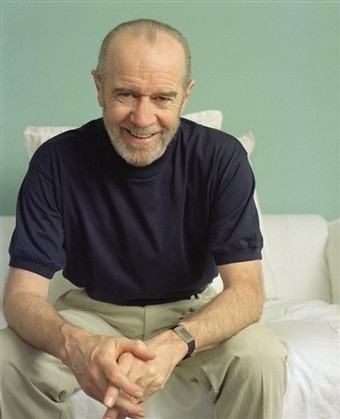
Morbid Press Play Capitalizes on George Carlin’s Death

george_carlin_sitting.jpg

Today, not more than a few hours after word of George Carlin’s death spread across the internet, this atrocity arrived in the Adrants inbox:

“Today, we learned of the passing of comedy great George Carlin, an unintentional champion of freedom of speech.

Over the years, the discussion of WHAT CAN BE SAID on TV has raised eyebrows, and court gavels. From “period” to “pregnant,” how are companies talking to their audiences these days and how has it changed since years before.

An editor at [redacted] is available for commentary on this new media culture, including:

– Talk Dirty: Have new forms of advertisement–in reality TV, blogs and beyond–helped increase sales and trust in the company’s products?

– Pop Culture: How is today’s media culture, with reality television and blogs, making the line between public and private erode?

– Method to Madness: What is the company’s reasoning for addressing its consumers in such an open manner as opposed to 20 years ago?

I look forward to your interest and will follow up soon. Alternatively, you can reach me at [redacted].

Best,

[Redacted]”

If you’re press and have an interest in advertising, you know who this is from. If you aren’t, it really doesn’t matter because the people (and their representatives) who sent it will read this and get the message without having to endure a litany or rude commentary which would serve no one well. Let’s just call this a public service.

There is absolutely nothing wrong with a company or media outlet latching on to a current news event or trend to either further discussion of the event or to self promote. But to attempt to tie the death of an iconic comic to some stupid social media trend is, well, stupid…and idiotic…and dumb….and insensitive…and unfeeling.


Picture of Steve Hall

Steve Hall

RECENT ARTICLES

TRENDING AROUND THE WEB

There’s a specific kind of exhaustion that only people who eat lunch with colleagues out of obligation understand. It’s not tiredness from conversation. It’s tiredness from translating yourself into a version that fits a table you never chose to sit at.

There’s a specific kind of exhaustion that only people who eat lunch with colleagues out of obligation understand. It’s not tiredness from conversation. It’s tiredness from translating yourself into a version that fits a table you never chose to sit at.

Global English Editing

I’m 37 and I’ve read 127 self-improvement books in the last six years and the only thing that actually changed my life was the moment I realized I was trying to fix a version of myself that other people were disappointed in, not the person I actually am

I’m 37 and I’ve read 127 self-improvement books in the last six years and the only thing that actually changed my life was the moment I realized I was trying to fix a version of myself that other people were disappointed in, not the person I actually am

Global English Editing

Psychology says the people who obsessively pack and repack their bags the night before a trip aren’t anxious — they’re processing something much older than travel

Psychology says the people who obsessively pack and repack their bags the night before a trip aren’t anxious — they’re processing something much older than travel

Global English Editing

Nobody tells you that pain doesn’t just change what you feel. It changes what you notice. After real loss, you start seeing grief in strangers’ faces at the grocery store, hearing exhaustion in your friend’s laugh, catching the micro-hesitation before someone says ‘I’m fine.’ Pain gave you a fluency you never asked for and can never unlearn

Nobody tells you that pain doesn’t just change what you feel. It changes what you notice. After real loss, you start seeing grief in strangers’ faces at the grocery store, hearing exhaustion in your friend’s laugh, catching the micro-hesitation before someone says ‘I’m fine.’ Pain gave you a fluency you never asked for and can never unlearn

Global English Editing

Most people don’t realize that the ache of loneliness isn’t actually about being alone – neuroscientists say it’s the brain’s alarm system detecting that you’re cut off from the kind of reciprocal attention humans need to regulate their nervous system

Most people don’t realize that the ache of loneliness isn’t actually about being alone – neuroscientists say it’s the brain’s alarm system detecting that you’re cut off from the kind of reciprocal attention humans need to regulate their nervous system

Global English Editing

I retired at 62 with plenty of money and a beautiful home, but I kept decorating it for guests who never came — until I realized I had built an entire life designed to impress people who weren’t actually paying attention

I retired at 62 with plenty of money and a beautiful home, but I kept decorating it for guests who never came — until I realized I had built an entire life designed to impress people who weren’t actually paying attention

Global English Editing










