
Learn from Davo: Slow Down, Stupid.

what-davo-loves.jpg

@dirkthecow introduced us to What Davo Loves, a responsible-driving initiative for Queensland Transport, Australia.

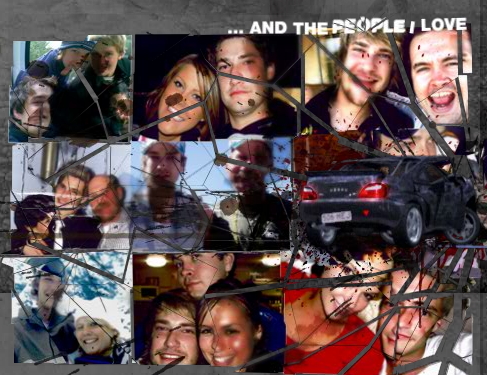
The site’s put together like a generic profile page for a dude called Davo. At right is a montage of people he loves, and at left is a video of him fondling his new car, lamely named “Rex.”

All frothy fun, right? That is, until the car careens out of the video frame and slams into his collage of friends, fracturing their faces like so much cheap glass.

Nice integration of the breaking-the-fourth-wall gimmick, a popular one of late. Once the moment’s sunk in, the site makes way for the straightforward campaign tagline: “Slow down, stupid.”

Users are invited to spread the message to friends and family, or watch more depressing videos, one of which depicts a bunch of extinguished faces in grayscale. (Part of me expected to hear Smeagol go, “Don’t follow the lights…!”)

We love a little melodrama, but the effort isn’t nearly as much fun as this Australian campaign in which speed-demons were playfully typecast as, uh, over-compensators.


Picture of Steve Hall

Steve Hall

RECENT ARTICLES

TRENDING AROUND THE WEB

Psychologists explain that people who were never yelled at but always met with silence when they disappointed someone often develop a fear of calm that follows them into every adult relationship. They don’t flinch at anger. They flinch at quiet.

Psychologists explain that people who were never yelled at but always met with silence when they disappointed someone often develop a fear of calm that follows them into every adult relationship. They don’t flinch at anger. They flinch at quiet.

Global English Editing

I’m 73 and I just realized I have no close friends — not because I’m unlikeable, but because I spent forty years being pleasant to everyone and deep with no one, and now I don’t even know how to start

I’m 73 and I just realized I have no close friends — not because I’m unlikeable, but because I spent forty years being pleasant to everyone and deep with no one, and now I don’t even know how to start

Global English Editing

The difference between people who age into bitterness and people who age into warmth often comes down to one thing — Whether they treated happiness as something they deserved or something that grew naturally from how they chose to live each day

The difference between people who age into bitterness and people who age into warmth often comes down to one thing — Whether they treated happiness as something they deserved or something that grew naturally from how they chose to live each day

Global English Editing

The people who seem most at peace in their 60s and 70s didn’t find happiness by searching for it — they built lives where meaning, routine, and genuine connection left room for happiness to show up on its own terms

The people who seem most at peace in their 60s and 70s didn’t find happiness by searching for it — they built lives where meaning, routine, and genuine connection left room for happiness to show up on its own terms

Global English Editing

The generation that grew up in the 1950s and 60s wasn’t given a childhood — they were given a rehearsal for adulthood, handed responsibilities before they had finished being children, and then spent the rest of their lives wondering why they felt robbed of something they couldn’t quite name

The generation that grew up in the 1950s and 60s wasn’t given a childhood — they were given a rehearsal for adulthood, handed responsibilities before they had finished being children, and then spent the rest of their lives wondering why they felt robbed of something they couldn’t quite name

Global English Editing

The real reason boomer women who raised children, worked full-time, and cared for aging parents without complaining now struggle to accept help isn’t pride — it’s that their entire sense of worth was built around being the person who could handle everything, and slowing down feels like becoming irrelevant

The real reason boomer women who raised children, worked full-time, and cared for aging parents without complaining now struggle to accept help isn’t pride — it’s that their entire sense of worth was built around being the person who could handle everything, and slowing down feels like becoming irrelevant

Global English Editing