Joss Whedon’s Dr. Horrible Could Make Profitable New Model for Online Serials

dr-horrible-joss-whedon.jpg

If you were a fan of Buffy: The Vampire Slayer or its slightly traumatizing spin-off Angel, you might get teary with glee over Acts I and II of Dr. Horrible’s Sing-Along Blog, an effort by creator Joss Whedon to raise crowdsourced funding for a web-only show. (See trailer!)

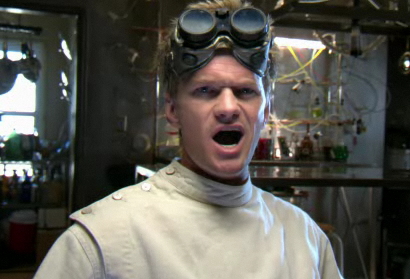
Dr. Horrible, played by Neil Patrick Harris, is a singing supervillain. He uses the blog to share his dreams of dominating the world and joining an elite frat, the Evil League of Evil, whose membership he’ll probably never earn unless he defects for a series that takes itself more seriously, like True Blood.

“If you’re gonna get into the Evil League of Evil you have to have a memorable laugh,” insists Dr. Horrible, who looks like a cross between Doogie Howser, MD and Butters masquerading as Professor Chaos.

Whedon, whose Buffy musical episode still stirs fans into a froth, says the “very midlife-crisisy” Dr. Horrible idea hatched during the WGA writers strike. The idea is to create a “really thrilling, professionalish piece of entertainment specifically for the Internet.”

The Globe and Mail thinks Dr. Horrible’s quality, humor and inventiveness “signify a great leap forward for online video.” More importantly, it’s generated a low-key buzz. One of my more disgruntled chums swears he’s been sent to Dr. Horrible’s blog “12 times just this morning!” from a passel of evangelistic geeks.

The videos are available free on sites like Hulu until midnight this Sunday. After that, devotees (of which I might be one, I haven’t yet decided) must purchase episodes on iTunes — where, two days ago, Act I was rated the most-downloaded TV clip.

Whedon knows damn well how to build a cult following. And the ‘net may just prove his biggest cash cow yet.


Picture of Steve Hall

Steve Hall

RECENT ARTICLES

TRENDING AROUND THE WEB

People who secretly see you as competition usually display these 7 behaviors

People who secretly see you as competition usually display these 7 behaviors

Hack Spirit

In the original precrastination experiments, people picked up whichever bucket was closer and carried it the rest of the way — even when it meant carrying more total weight for longer — just to stop holding the choice open

In the original precrastination experiments, people picked up whichever bucket was closer and carried it the rest of the way — even when it meant carrying more total weight for longer — just to stop holding the choice open

Global English Editing

If someone is only pretending to like you, these 8 behaviors usually give them away

If someone is only pretending to like you, these 8 behaviors usually give them away

Hack Spirit

7 things people quietly outgrow once they become comfortable with who they are

7 things people quietly outgrow once they become comfortable with who they are

Hack Spirit

Cornell researcher Vanessa Bohns has spent years studying why people agree to requests they’d rather decline, and her research consistently finds that people dramatically overestimate the social cost of saying no, which means most of the exhaustion of over-committing gets paid for a consequence that was never really on the table

Cornell researcher Vanessa Bohns has spent years studying why people agree to requests they’d rather decline, and her research consistently finds that people dramatically overestimate the social cost of saying no, which means most of the exhaustion of over-committing gets paid for a consequence that was never really on the table

Global English Editing

If you want a quieter mind as you get older, say goodbye to these 8 daily habits

If you want a quieter mind as you get older, say goodbye to these 8 daily habits

Hack Spirit