It Wouldn’t be a Super Bowl Without an Infographic

SuperBowl2012_Pre_GraphicsRoll_small.jpg

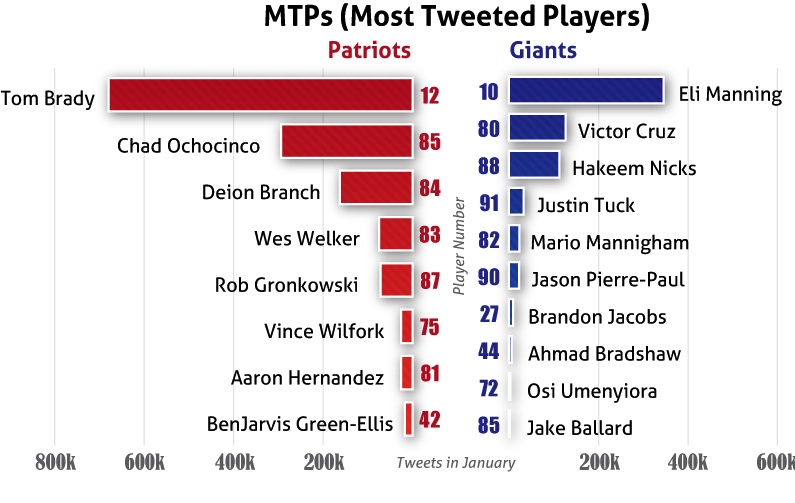
Hey everyone’s doing it so why not a social media agency looking to get some ink around Super Bowl hype? Seattle-based social media agency Banyan Branch has put together this infographic examining the buzz leading up to this year’s game. Data was collected between December 30 and January 29. Some highlights:

– Quarterbacks captured the majority of the conversation buzz – most of which was football related (though Tom Brady also has some conversation around his personal life mixed in)

– Tom Brady generated the most conversation and yielded more yards than Eli Manning

– Receivers for both teams also generated a fair amount of buzz primarily due to their own activity on the channel there was no correlation between the volume of Twitter traffic and statistical performance on the field

– People like to talk about the Giants, but the Patriot players individually get more attention, including the coaches

And there you have it. Now stop wasting time and get back to work.

SuperBowl2012_Pre_GraphicsRoll.jpg

Picture of Steve Hall

Steve Hall

RECENT ARTICLES

TRENDING AROUND THE WEB

9 things deeply curious people do that make ordinary days feel interesting

9 things deeply curious people do that make ordinary days feel interesting

Hack Spirit

The difference between editing and proofreading (and why it matters for your work)

The difference between editing and proofreading (and why it matters for your work)

Global English Editing

8 small habits of people born in the 60s and 70s that make them wonderful neighbors

8 small habits of people born in the 60s and 70s that make them wonderful neighbors

Hack Spirit

7 quiet signs someone has made real peace with getting older

7 quiet signs someone has made real peace with getting older

Hack Spirit

8 things emotionally mature people do when an old friend disappoints them

8 things emotionally mature people do when an old friend disappoints them

Hack Spirit

Why we say one thing and mean another — the linguistics and cognition of the intent–expression gap

Why we say one thing and mean another — the linguistics and cognition of the intent–expression gap

Global English Editing