
I’d like to Buy the World A…Volkswagen?

vw_sb_13_get_happy.png

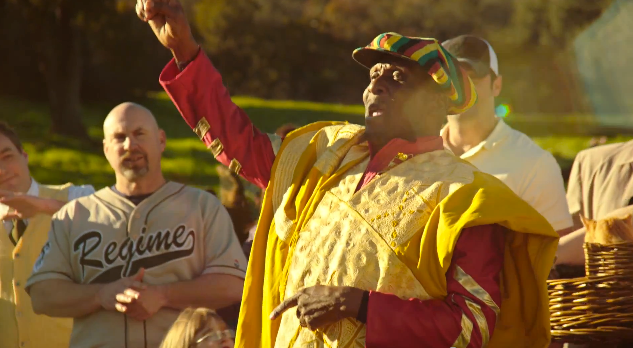
Sorry. We can’t help it. While we like this Deutsch LA-created Volkswagen Super Bowl teaser ad which gathers together a cavalcade YouTube freak outs for a come-to-Jesus-like moment with reggae musician Jimmy Cliff, we can’t help but conjure visions of Coke’s 1971 classic “I’d like to Buy the World A Coke” commercial. Oh wait. It was intentional. My bad.

The teaser, which leads off with clips of the Eharmony cat-hugging woman; the sad Packers fan; “Boogie,” the guy who destroys his Xbox because someone called him fat; the baseball coach who throws a tantrum at an umpire; the screaming politician; and the sports mascots who fight each other, ends with them all coming together in a field as Cliff sings a rendition of “C’mon Get Happy? from the Partridge Family.

And so it would seem all one now needs to be happy is a new VW. Great but what is the ad saying here? The cost of happiness just rose from, say, $1.50 to, say, $22,000? That’s pretty steep. While we own a VW and don’t drink Coke, we still think we’d opt for the cheaper solution. Then again, we already own a VW, hence, we’re already happy and don’t need a Coke. Sorry, Coke.

YouTube video

Picture of Steve Hall

Steve Hall

RECENT ARTICLES

TRENDING AROUND THE WEB

8 things people who give thoughtful gifts pay attention to all year

8 things people who give thoughtful gifts pay attention to all year

Hack Spirit

Greif and Gleason’s 1980 research on how children learn politeness routines found that young children almost never say “please” or “thank you” spontaneously, they say it because a parent prompts them with “what do you say?” dozens of times a week, meaning the reflex adults later display without thinking twice was built through years of someone else’s prompting long before it became automatic.

Greif and Gleason’s 1980 research on how children learn politeness routines found that young children almost never say “please” or “thank you” spontaneously, they say it because a parent prompts them with “what do you say?” dozens of times a week, meaning the reflex adults later display without thinking twice was built through years of someone else’s prompting long before it became automatic.

Global English Editing

8 signs your in-laws see you as their own, not just someone their child married

8 signs your in-laws see you as their own, not just someone their child married

Hack Spirit

Many adult children remember watching a father work sixty-hour weeks for decades so the family could have what he never did, then watched him die in his sixties without ever prioritizing his own happiness, and now see that same pattern quietly repeating in their own lives, under a different name.

Many adult children remember watching a father work sixty-hour weeks for decades so the family could have what he never did, then watched him die in his sixties without ever prioritizing his own happiness, and now see that same pattern quietly repeating in their own lives, under a different name.

Global English Editing

Harvard researchers had 166 undergraduates rate their own pets on qualities like thoughtful, considerate and sympathetic, and the students who felt most chronically disconnected from other people scored their pets meaningfully higher on exactly those three traits, and no others.

Harvard researchers had 166 undergraduates rate their own pets on qualities like thoughtful, considerate and sympathetic, and the students who felt most chronically disconnected from other people scored their pets meaningfully higher on exactly those three traits, and no others.

Global English Editing

University of Arizona researchers wired 79 people with a recorder sampling conversations every 12.5 minutes for four days and found the happiest had twice as many substantive conversations and a third as much small talk as the unhappiest, suggesting the discomfort was never a social deficit.

University of Arizona researchers wired 79 people with a recorder sampling conversations every 12.5 minutes for four days and found the happiest had twice as many substantive conversations and a third as much small talk as the unhappiest, suggesting the discomfort was never a social deficit.

Global English Editing











