
Fake Auto Boots Promote Parking App at SXSW

parkme_boot.JPG

This SXSW coverage is brought to you by Red Square Agency. The agency that also brought you Frappe.

With SXSW on a seemingly endless growth curve, standing out as a marketer is becoming more and more difficult. This year many large brands erected monstrous structures, took over restaurants, built large stand-alone branded structures and hosted concerts with major artists. But what’s a small app developer to do amidst marketing giants?

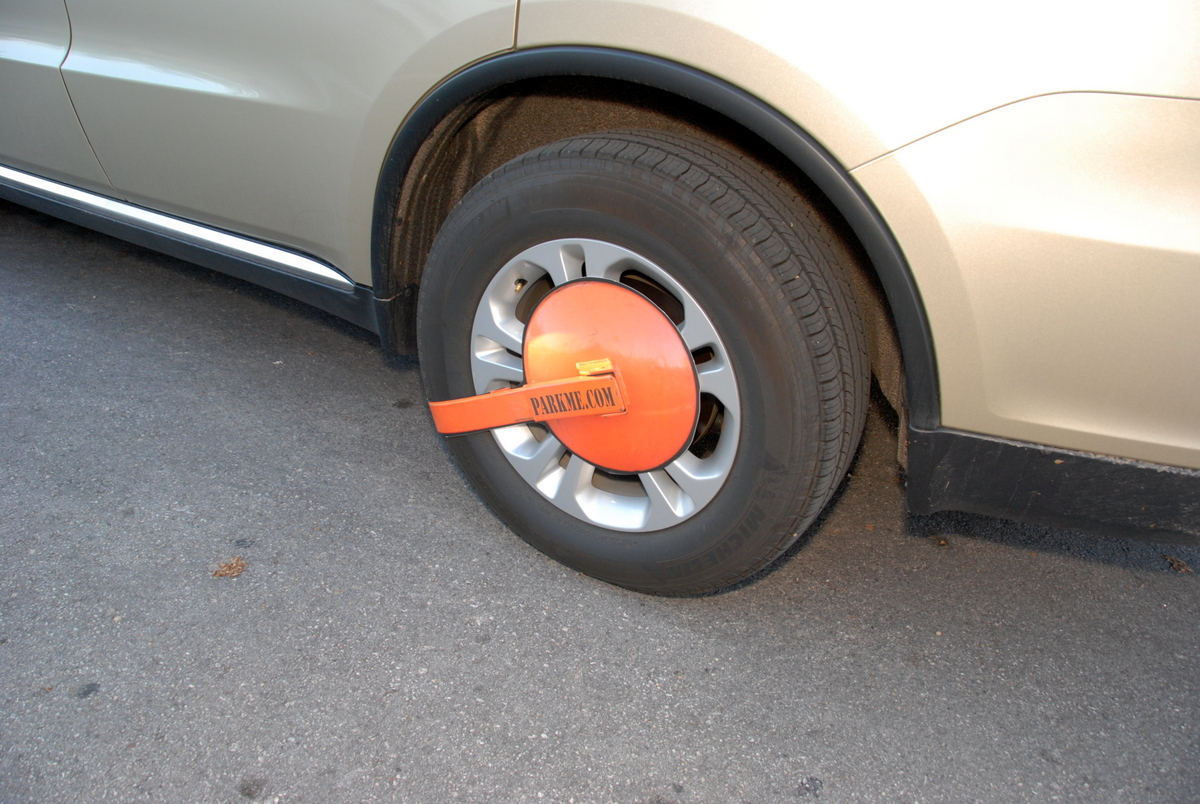
As we made our way from some panel to another…or maybe it was one party to another…we don’t know…it all blurs together…we stumbled upon a minivan that looked like it had a boot applied to one of its wheels. On closer inspection, it turned out the boot was just a cardboard placard affixed to the tire and was promoting an app called ParkMe.

The recently launched ParkMe recommends the cheapest and closest parking based on your location. It’s yet another in a long line of location-based apps that serves people on the go.

We like the simplicity and the pitch perfect strategy employed for this campaign. No one wants their car to have the dreaded boot applied because they have parked where they weren’t supposed to. And the boot is most certainly an eye catching appliance just because of that fear. Additionally, the production involved in creating this campaign is right in line with the focus of the app. In other words, it’s all about cheap. All about saving money.

It doesn’t always take millions to market a product.

This SXSW coverage has been brought to you by Red Square, a small national agency that just happens to be located in the SXSE.

redsquare.png

Picture of Steve Hall

Steve Hall

RECENT ARTICLES

TRENDING AROUND THE WEB

University of Arizona researchers wired 79 people with a recorder sampling conversations every 12.5 minutes for four days and found the happiest had twice as many substantive conversations and a third as much small talk as the unhappiest, suggesting the discomfort was never a social deficit.

University of Arizona researchers wired 79 people with a recorder sampling conversations every 12.5 minutes for four days and found the happiest had twice as many substantive conversations and a third as much small talk as the unhappiest, suggesting the discomfort was never a social deficit.

Global English Editing

A landmark study found that Catholic nuns who wrote sparse, simple autobiographies in their early twenties, when they entered the convent in the 1930s, were far more likely to develop Alzheimer’s disease roughly six decades later, with about 80 percent of the low-complexity writers eventually developing the disease compared to only 10 percent of those whose youthful essays were dense with ideas

A landmark study found that Catholic nuns who wrote sparse, simple autobiographies in their early twenties, when they entered the convent in the 1930s, were far more likely to develop Alzheimer’s disease roughly six decades later, with about 80 percent of the low-complexity writers eventually developing the disease compared to only 10 percent of those whose youthful essays were dense with ideas

Global English Editing

Jordan Peterson opens Rule 6 of “12 Rules for Life” by asking, “If you can’t even clean up your own room, who the hell are you to give advice to the world?” — arguing that the discipline to fix a small mess is the same discipline a marriage, a career, or a country eventually demands.

Jordan Peterson opens Rule 6 of “12 Rules for Life” by asking, “If you can’t even clean up your own room, who the hell are you to give advice to the world?” — arguing that the discipline to fix a small mess is the same discipline a marriage, a career, or a country eventually demands.

Global English Editing

9 habits that give away someone who grew up in a big family

9 habits that give away someone who grew up in a big family

Hack Spirit

Psychologists did not coin emotional intelligence until 1990, and Goleman’s book did not popularize it until 1995, so people raised between 1945 and 1975 grew up with no shared vocabulary for feelings, many still improvising one from watching, guessing, and going quiet when intimacy calls for words.

Psychologists did not coin emotional intelligence until 1990, and Goleman’s book did not popularize it until 1995, so people raised between 1945 and 1975 grew up with no shared vocabulary for feelings, many still improvising one from watching, guessing, and going quiet when intimacy calls for words.

Global English Editing

8 things dog owners do that reveal more about them than they realise

8 things dog owners do that reveal more about them than they realise

Hack Spirit











