Evian Gives Second Life Users a New Lease on Skin

evian vending.png

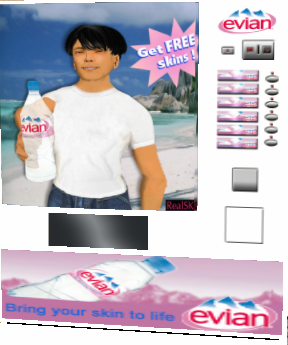
We took issue with Evian’s use of language in the last ad of theirs we covered, but the words on its virtual vending machine are just too weird not to pick at.

The machine reads, “Bring your skin to life.” and “Get FREE skins!”

Not sure how it’s possible, but before Evian, we haven’t seen anybody talk of human skin and online skins so closely together.

Strange. And somehow very uncomfortable. (We’re thinking Silence of the Lambs, except without the moths.)

Anyway, Evian actually is giving Second Life residents new skin when they buy a bottle of Evian water. According to the pressie, “the bodily presentation of the character then becomes more defined, having a better texture and is lit in a more flattering manner.”


Picture of Steve Hall

Steve Hall

RECENT ARTICLES

TRENDING AROUND THE WEB

I’m 63 and I woke up last Thursday and realized I couldn’t name a single thing I was looking forward to – not because nothing good was happening but because I’d trained myself to find meaning in being needed and nobody needs me anymore

I’m 63 and I woke up last Thursday and realized I couldn’t name a single thing I was looking forward to – not because nothing good was happening but because I’d trained myself to find meaning in being needed and nobody needs me anymore

Global English Editing

8 things boomers do in restaurants that their adult children have been quietly apologizing to servers about for years (and they don’t even realize it)

8 things boomers do in restaurants that their adult children have been quietly apologizing to servers about for years (and they don’t even realize it)

Global English Editing

Research suggests people who remained in their hometown while their peers left develop a paradoxical identity — they become the keeper of a world that’s slowly disappearing around them, the last person who remembers what the high street looked like before the chains arrived, and that role carries both pride and a loneliness that people who left will never understand because they took their version of the town with them when they went

Research suggests people who remained in their hometown while their peers left develop a paradoxical identity — they become the keeper of a world that’s slowly disappearing around them, the last person who remembers what the high street looked like before the chains arrived, and that role carries both pride and a loneliness that people who left will never understand because they took their version of the town with them when they went

Global English Editing

I’m 73 and I’ve learned that the marriage conversations that matter most never start with “we need to talk” — they start with a long drive, a bad week, or one of you finally saying something true by accident

I’m 73 and I’ve learned that the marriage conversations that matter most never start with “we need to talk” — they start with a long drive, a bad week, or one of you finally saying something true by accident

Global English Editing

Research suggests the most damaging legacy of growing up with one strong parent and one weak parent isn’t the resentment toward the weak parent — it’s the internalized belief that love is something you earn by being useful, and that the moment you stop being useful, you become as invisible as the parent who didn’t show up

Research suggests the most damaging legacy of growing up with one strong parent and one weak parent isn’t the resentment toward the weak parent — it’s the internalized belief that love is something you earn by being useful, and that the moment you stop being useful, you become as invisible as the parent who didn’t show up

Global English Editing

The one phrase your adult children wish you would stop saying is something you say at least twice per visit — and family therapists say most parents who hear it identified can’t believe they’ve been saying it because to them it sounds like love

The one phrase your adult children wish you would stop saying is something you say at least twice per visit — and family therapists say most parents who hear it identified can’t believe they’ve been saying it because to them it sounds like love

Global English Editing