
Energy Savings Gets the RPG Treatment

energy-do-better.jpg

The Ad Council and the US Department of Energy are using a new ad effort to build a new “energy ethic” for tweens. The campaign’s called “What’s your excuse?” and was created by Goodby, Silverstein & Partners.

LoseYourExcuse.gov is stocked with tips for saving energy, desktop background downloads and the like. I really love the game, though. Been playing it all afternoon.

In an environment that brings Prince of Persia to mind, your job is to rescue energy from counterproductive villains that say things like “Programming thermostats is a drag.” Once you’ve absorbed the contents of each power pod, make a mad dash for the exit.

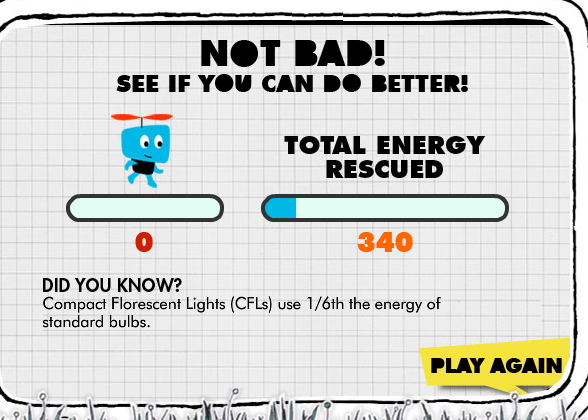
At the end of every level, you’re told how much you’ve rescued so far. You also get random tips for saving energy in real life.

Last month I read a Wired article about how Weight Watchers turns weight loss into an RPG game. I like the idea of teaching kids how to save energy the same way. The game at LoseYourExcuse.gov kinda moves in that direction. Press Play on the homepage to try it.


Picture of Steve Hall

Steve Hall

RECENT ARTICLES

TRENDING AROUND THE WEB

9 things deeply curious people do that make ordinary days feel interesting

9 things deeply curious people do that make ordinary days feel interesting

Hack Spirit

The difference between editing and proofreading (and why it matters for your work)

The difference between editing and proofreading (and why it matters for your work)

Global English Editing

8 small habits of people born in the 60s and 70s that make them wonderful neighbors

8 small habits of people born in the 60s and 70s that make them wonderful neighbors

Hack Spirit

7 quiet signs someone has made real peace with getting older

7 quiet signs someone has made real peace with getting older

Hack Spirit

8 things emotionally mature people do when an old friend disappoints them

8 things emotionally mature people do when an old friend disappoints them

Hack Spirit

Why we say one thing and mean another — the linguistics and cognition of the intent–expression gap

Why we say one thing and mean another — the linguistics and cognition of the intent–expression gap

Global English Editing










