Earl Jones Was Not Talking to Tiger in Nike Commercial


share
earl_tiger_woods.jpg

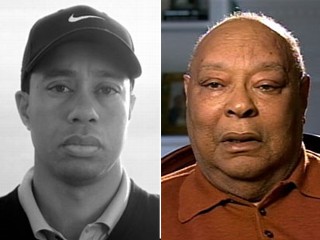
The audio used for the Earl and Tiger Woods ad was taken from a 2004 interview of Earl Woods during which he was talking about his wife Kultida, not Tiger. When Earl says “I am more prone to be inquisitive, to promote discussion. I want to find out what you’re thinking was, I want to find out what your feelings are and did you learn anything?”, he is describing his personality in comparison to Kultida’s.

It’s safe to say the voiceover used for the Earl and Tiger commercial is completely out of context to the subject at hand and adds a heavy dose of ammunition to the arsenal of the ad’s naysayers.

The way the ad is presented we are made to believe Earl is speaking directly to his son. Admonishing him. Offering fatherly advice. And in the commercial, we see Tiger looking like a chastised child.

Clearly this is not the case. The commercial was cobbled together by Wieden + Kennedy and presented as something it’s not. It’s a lie. A fabrication. Earl is not talking to Tiger. Tiger isn’t feeling remorse in the ad. He’s reacting to words his father didn’t even speak to him.

Though controversial, at least some merit could have been placed on the ad’s concept had Earl actually been talking about Tiger in the interview. Now it’s just another example of an agency bending the truth for its own gain.


Picture of Steve Hall

Steve Hall

RECENT ARTICLES

TRENDING AROUND THE WEB

7 things in-laws do that shape a marriage more than anyone admits

7 things in-laws do that shape a marriage more than anyone admits

Hack Spirit

8 things people who are excellent listeners do that nobody ever taught them

8 things people who are excellent listeners do that nobody ever taught them

Hack Spirit

8 things people who are always early understand that late people don’t

8 things people who are always early understand that late people don’t

Hack Spirit

Sociologist Erving Goffman’s research on what he called civil inattention found that the small, wordless adjustments strangers make for each other in shared public space, stepping aside, angling a cart, holding a gap, function as a form of social coordination just as real as speech, even though nothing is ever said.

Sociologist Erving Goffman’s research on what he called civil inattention found that the small, wordless adjustments strangers make for each other in shared public space, stepping aside, angling a cart, holding a gap, function as a form of social coordination just as real as speech, even though nothing is ever said.

Global English Editing

9 things people who give excellent advice do before they say a word

9 things people who give excellent advice do before they say a word

Hack Spirit

7 signs someone grew up with very little money, even if they are comfortable now

7 signs someone grew up with very little money, even if they are comfortable now

Hack Spirit