Direct Mail Piece Gets Edited For Truth

platinumbullshit.gif

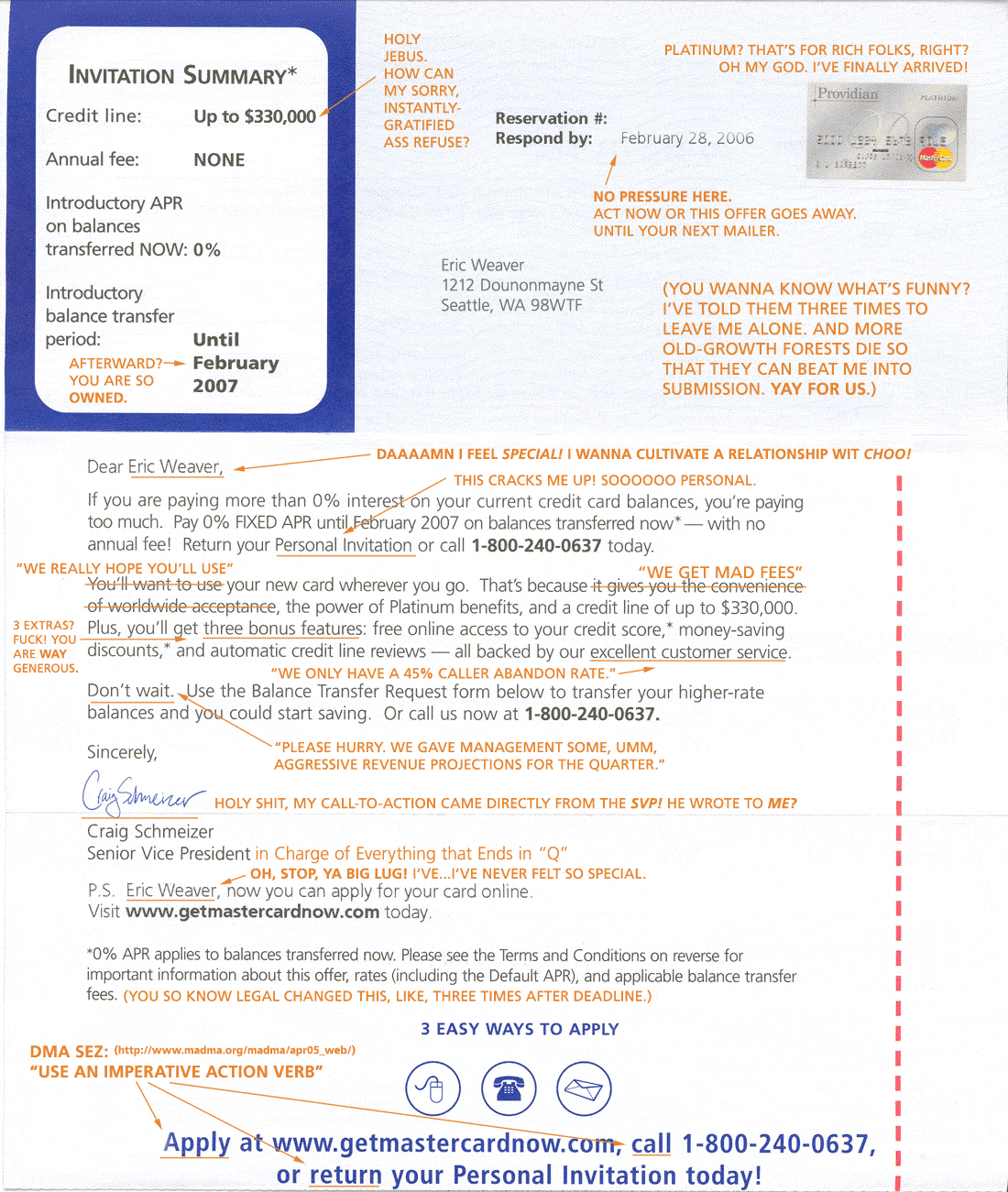
Ad-Verse’s Eric Weaver recently received a piece of direct mail, as we all have, and it, apparently, was one too many. Weaver took the DM piece and made a few comments and edits altering the piece to make it more truthful. Poking fun at everything from the promised credit line to the ever-so-important “respond by” date to attempts at personalization to unmasking what the marketer would really say if they were honest


Picture of Steve Hall

Steve Hall

RECENT ARTICLES

TRENDING AROUND THE WEB

8 things people say when they’re fine on the surface but running on empty underneath

8 things people say when they’re fine on the surface but running on empty underneath

Hack Spirit

Decades of research on expressive writing have found that writing honestly about a difficult experience for even a few minutes a day can improve mood and some physical health measures afterward — especially when people put feelings into words instead of just replaying the experience in their heads.

Decades of research on expressive writing have found that writing honestly about a difficult experience for even a few minutes a day can improve mood and some physical health measures afterward — especially when people put feelings into words instead of just replaying the experience in their heads.

Global English Editing

If someone secretly looks down on you, they’ll usually display these 7 behaviors

If someone secretly looks down on you, they’ll usually display these 7 behaviors

Hack Spirit

9 qualities of a truly good friend that have nothing to do with how often you speak

9 qualities of a truly good friend that have nothing to do with how often you speak

Hack Spirit

Benjamin Franklin won over a rival lawmaker in the 1730s by asking to borrow a book instead of doing him a favor, and psychologists later found the same trick makes total strangers like you more

Benjamin Franklin won over a rival lawmaker in the 1730s by asking to borrow a book instead of doing him a favor, and psychologists later found the same trick makes total strangers like you more

Global English Editing

Sociologist Charles Derber’s research on what he called conversational narcissism found that constantly steering a conversation back to yourself, even with something as small as “that reminds me of the time I—,” quietly starves the other person of the attention their story needed.

Sociologist Charles Derber’s research on what he called conversational narcissism found that constantly steering a conversation back to yourself, even with something as small as “that reminds me of the time I—,” quietly starves the other person of the attention their story needed.

Global English Editing