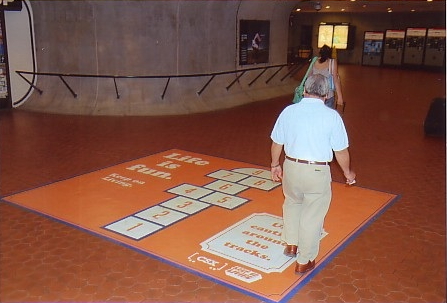
DC Commuters Play Hopscotch for Rail Safety

subway-csx.jpg

I bet subway stations are among the most bountiful wellsprings of suicidal feelings. They are generally ugly, reeking of piss and bad food, and we get stuck at some such place for longer than we’d like, contemplating the person and/or creative career we failed to pursue.

No wonder people fling themselves into the tracks.

Exit10’s “Life is Fun” campaign for Washington, DC METRO gives commuters games like hopscotch and I Spy to pass the time. The message: “Life is fun. Keep on living. Use caution around the tracks.”

The few times I have seen rail-related accidents, they involved people trying to throw themselves in front of trains. So while I’m not convinced that playground diversions will distract the genuinely-bent, maybe the campaign will do a good job of keeping careless iPod users from wandering where they shouldn’t and falling facedown on the third rail.

“Life is Fun” launches Thursday at Farragut West and McPherson Square stations. Hopscotch and other games will be on platforms and rail cars. Riders will also get handheld games to keep them busy during less interactive moments in transit.


Picture of Steve Hall

Steve Hall

RECENT ARTICLES

TRENDING AROUND THE WEB

8 things people who work best with music on have in common

8 things people who work best with music on have in common

Hack Spirit

7 things people who hit snooze five times a morning have in common

7 things people who hit snooze five times a morning have in common

Hack Spirit

7 things people who work with their hands understand that office workers rarely do

7 things people who work with their hands understand that office workers rarely do

Hack Spirit

7 things decisive people do differently than people who are just impulsive

7 things decisive people do differently than people who are just impulsive

Hack Spirit

8 things people who give thoughtful gifts pay attention to all year

8 things people who give thoughtful gifts pay attention to all year

Hack Spirit

Greif and Gleason’s 1980 research on how children learn politeness routines found that young children almost never say “please” or “thank you” spontaneously, they say it because a parent prompts them with “what do you say?” dozens of times a week, meaning the reflex adults later display without thinking twice was built through years of someone else’s prompting long before it became automatic.

Greif and Gleason’s 1980 research on how children learn politeness routines found that young children almost never say “please” or “thank you” spontaneously, they say it because a parent prompts them with “what do you say?” dozens of times a week, meaning the reflex adults later display without thinking twice was built through years of someone else’s prompting long before it became automatic.

Global English Editing