Boob Job Ad Banned

cosmetic_boob_job.jpg

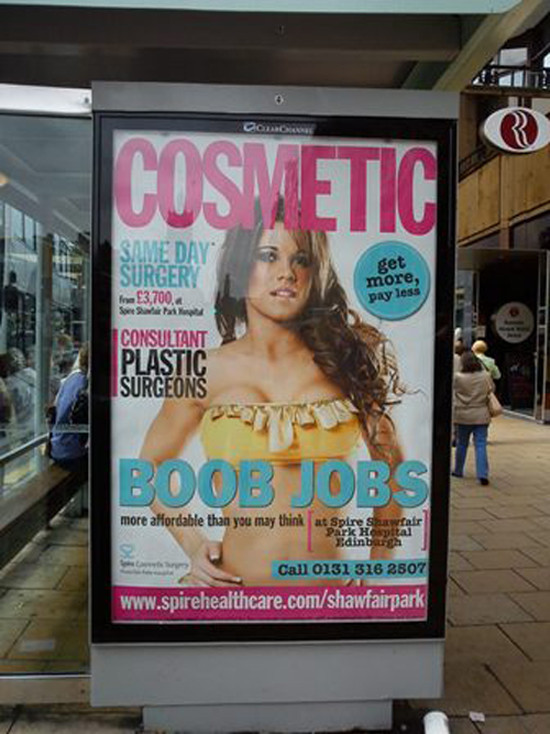
Well everyone else has written about this so we might as well too. The Advertising Standards Authority, a UK-based entity that will ban ads even if they get as little as a couple of complaints. This time around, panties are in a bunch over a cosmetic surgery ad that promotes bobs jobs. The ad, which looks very much like the cover of Cosmopolitan, takes the form of a bus shelter and reads “Cosmetic” across the top.

Other text call outs include “Boob Jobs,” Same Day Surgery,” “get more, pay less” and “more affordable than you may think.” A model with substantial breasts graces the cover as well.

The ASA has taken issue with the ad because it makes light of cosmetic surgery and targets young women. The ASA said the ad’s image of “the woman with large breasts and a top which accentuated that conveyed the message that breast surgery was a straightforward, risk-free lifestyle decision” and that the ad did not promote the procedure “in a sufficiently responsible manner.”


Picture of Steve Hall

Steve Hall

RECENT ARTICLES

TRENDING AROUND THE WEB

7 things people who hit snooze five times a morning have in common

7 things people who hit snooze five times a morning have in common

Hack Spirit

7 things people who work with their hands understand that office workers rarely do

7 things people who work with their hands understand that office workers rarely do

Hack Spirit

7 things decisive people do differently than people who are just impulsive

7 things decisive people do differently than people who are just impulsive

Hack Spirit

8 things people who give thoughtful gifts pay attention to all year

8 things people who give thoughtful gifts pay attention to all year

Hack Spirit

Greif and Gleason’s 1980 research on how children learn politeness routines found that young children almost never say “please” or “thank you” spontaneously, they say it because a parent prompts them with “what do you say?” dozens of times a week, meaning the reflex adults later display without thinking twice was built through years of someone else’s prompting long before it became automatic.

Greif and Gleason’s 1980 research on how children learn politeness routines found that young children almost never say “please” or “thank you” spontaneously, they say it because a parent prompts them with “what do you say?” dozens of times a week, meaning the reflex adults later display without thinking twice was built through years of someone else’s prompting long before it became automatic.

Global English Editing

8 signs your in-laws see you as their own, not just someone their child married

8 signs your in-laws see you as their own, not just someone their child married

Hack Spirit