Bear Thanks Man For Helping Stem the Tide of Melting Icebergs

nissan_leaf_polar_bear.jpg

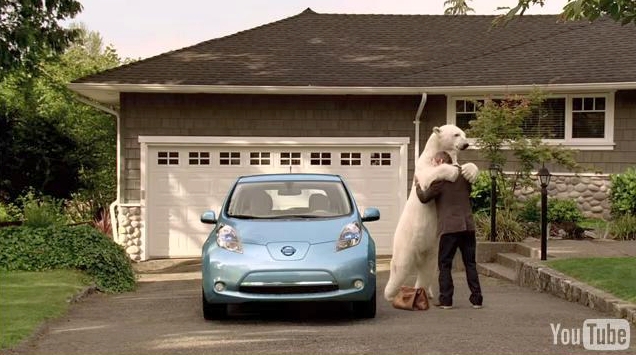
Today Nissan, with help from TBWAChiatDay LA, has launched, as part of its Innovation For All campaign, a new commercial “Polar Bear” to tout the Nissan LEAF. We’re told it’s “the world’s first mass market, affordable zero-emission 100-percent electric vehicle.”

In the commercial, a polar bear journeys from the Arctic through forests, highways, train tracks and over bridges to the big city and then into the suburbs until he finds a Nissan LEAF.owner. What does the bear then do? Give the man a giant bear hug, of course. Why? Because the car is supposed to leave less of an impact on the environment.

Still, we wonder how a few thousand electric cars, which, by the way, need electricity most likely derived from fossil burning fuels, are going to stem global warming enough to stop the melting of icebergs. Well, one step at a time we guess.


Picture of Steve Hall

Steve Hall

RECENT ARTICLES

TRENDING AROUND THE WEB

7 things people who hit snooze five times a morning have in common

7 things people who hit snooze five times a morning have in common

Hack Spirit

7 things people who work with their hands understand that office workers rarely do

7 things people who work with their hands understand that office workers rarely do

Hack Spirit

7 things decisive people do differently than people who are just impulsive

7 things decisive people do differently than people who are just impulsive

Hack Spirit

8 things people who give thoughtful gifts pay attention to all year

8 things people who give thoughtful gifts pay attention to all year

Hack Spirit

Greif and Gleason’s 1980 research on how children learn politeness routines found that young children almost never say “please” or “thank you” spontaneously, they say it because a parent prompts them with “what do you say?” dozens of times a week, meaning the reflex adults later display without thinking twice was built through years of someone else’s prompting long before it became automatic.

Greif and Gleason’s 1980 research on how children learn politeness routines found that young children almost never say “please” or “thank you” spontaneously, they say it because a parent prompts them with “what do you say?” dozens of times a week, meaning the reflex adults later display without thinking twice was built through years of someone else’s prompting long before it became automatic.

Global English Editing

8 signs your in-laws see you as their own, not just someone their child married

8 signs your in-laws see you as their own, not just someone their child married

Hack Spirit