Another Swiss Invention to Augment Your Difficult Life

effort_bullfight.jpg

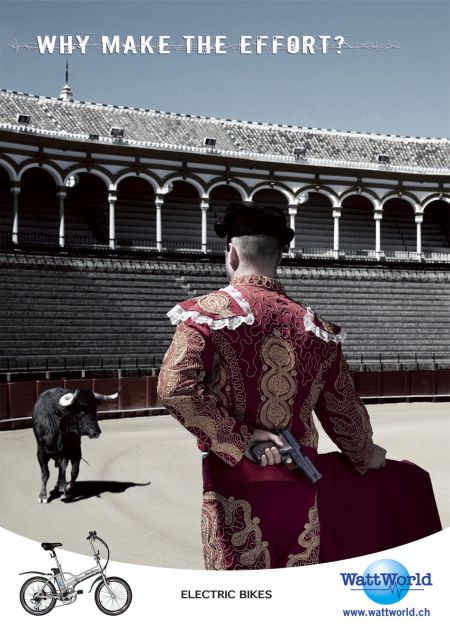
McCann Erickson, Geneva put together these ads under the headline, “Why make the effort?” for WattWorld‘s electric bikes in Sweden. The campaign depicts various situations where, instead of taking the noble course, you could just … not make the effort.

Balendu suggests the variety of “effortless” scenarios in the campaign deters from the notion of the electric bike. There’s some truth to this as we found the concept kind of confusing at first.

But consumers learn fast, and we might just be biased toward electric bikes. If we lose the opportunity to laugh and point while someone pedals uphill with their asses in the air, that’s one less daily pleasure in life.


Picture of Steve Hall

Steve Hall

RECENT ARTICLES

TRENDING AROUND THE WEB

7 things people who hit snooze five times a morning have in common

7 things people who hit snooze five times a morning have in common

Hack Spirit

7 things people who work with their hands understand that office workers rarely do

7 things people who work with their hands understand that office workers rarely do

Hack Spirit

7 things decisive people do differently than people who are just impulsive

7 things decisive people do differently than people who are just impulsive

Hack Spirit

8 things people who give thoughtful gifts pay attention to all year

8 things people who give thoughtful gifts pay attention to all year

Hack Spirit

Greif and Gleason’s 1980 research on how children learn politeness routines found that young children almost never say “please” or “thank you” spontaneously, they say it because a parent prompts them with “what do you say?” dozens of times a week, meaning the reflex adults later display without thinking twice was built through years of someone else’s prompting long before it became automatic.

Greif and Gleason’s 1980 research on how children learn politeness routines found that young children almost never say “please” or “thank you” spontaneously, they say it because a parent prompts them with “what do you say?” dozens of times a week, meaning the reflex adults later display without thinking twice was built through years of someone else’s prompting long before it became automatic.

Global English Editing

8 signs your in-laws see you as their own, not just someone their child married

8 signs your in-laws see you as their own, not just someone their child married

Hack Spirit