
Animal Clinic Gets Witty With Sex-Laced Genital Cutting Campaign

nocondom_humane_society.jpg

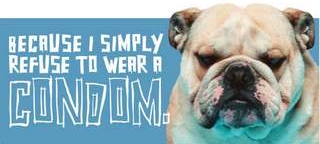
If sex sells for humans, why can’t it sell for animals as well? Well, it does, (sort of, considering it’s the humans who are the ultimate buyers here for their pets) for the Kentucky Humane Society which launched a campaign to promote a new spaying and neutering clinic. The billboards and bus shelter posters, created by Creative Alliance, feature humorous copy such as “You’re going to cut off my what?”, “Safe Sex? That just means she’s been declawed”, “Because I simply refuse to wear a condom” and “Cause humping your leg doesn’t do it for me anymore.” You can view all the creative here.

For sure, it’s not your standard cute-cuddly approach but why should us greedy humans limit our sex-sells talent to half-naked, thong-clad women? Why not let the animal hotties have some fun too? Predictably, some have complained about the campaign’s approach. Family Foundation of Kentucky Communications Director Martin Cothran offered up this witty response to a Louisville Courier-Journal inquiry about the campaign: “Obviously some of these ads are not appropriate for a general audience, and besides, most pets would not find this a laughing matter.”


Picture of Steve Hall

Steve Hall

RECENT ARTICLES

TRENDING AROUND THE WEB

7 things people who hit snooze five times a morning have in common

7 things people who hit snooze five times a morning have in common

Hack Spirit

7 things people who work with their hands understand that office workers rarely do

7 things people who work with their hands understand that office workers rarely do

Hack Spirit

7 things decisive people do differently than people who are just impulsive

7 things decisive people do differently than people who are just impulsive

Hack Spirit

8 things people who give thoughtful gifts pay attention to all year

8 things people who give thoughtful gifts pay attention to all year

Hack Spirit

Greif and Gleason’s 1980 research on how children learn politeness routines found that young children almost never say “please” or “thank you” spontaneously, they say it because a parent prompts them with “what do you say?” dozens of times a week, meaning the reflex adults later display without thinking twice was built through years of someone else’s prompting long before it became automatic.

Greif and Gleason’s 1980 research on how children learn politeness routines found that young children almost never say “please” or “thank you” spontaneously, they say it because a parent prompts them with “what do you say?” dozens of times a week, meaning the reflex adults later display without thinking twice was built through years of someone else’s prompting long before it became automatic.

Global English Editing

8 signs your in-laws see you as their own, not just someone their child married

8 signs your in-laws see you as their own, not just someone their child married

Hack Spirit










