Airport Bag Tags Form Expedia Campaign

expedia_7_0.jpg

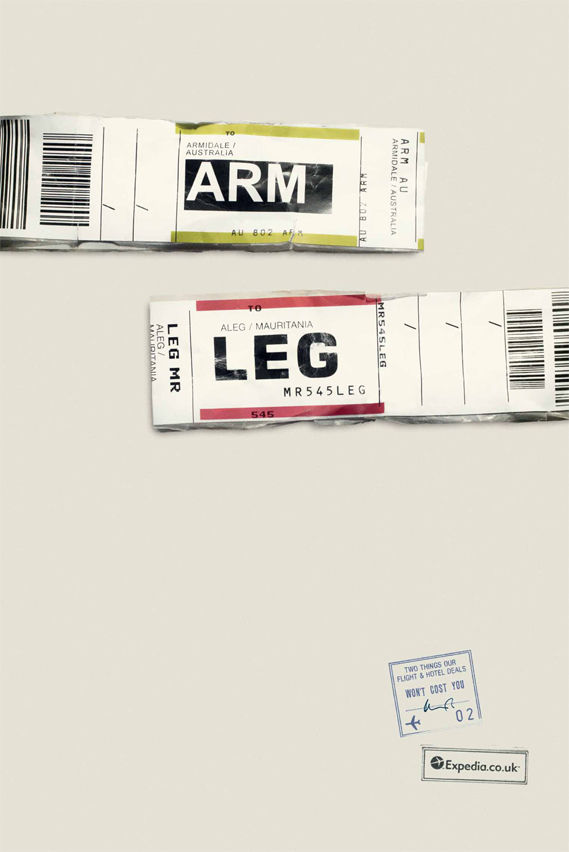
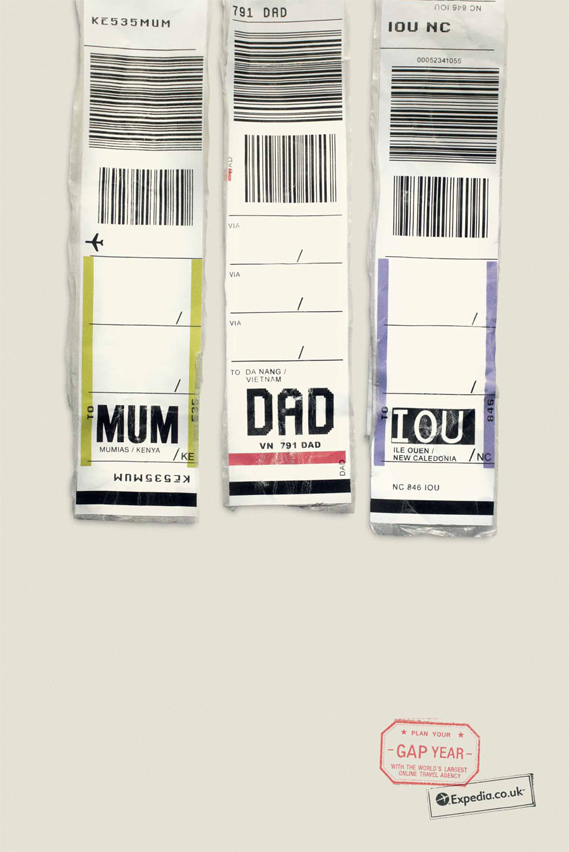
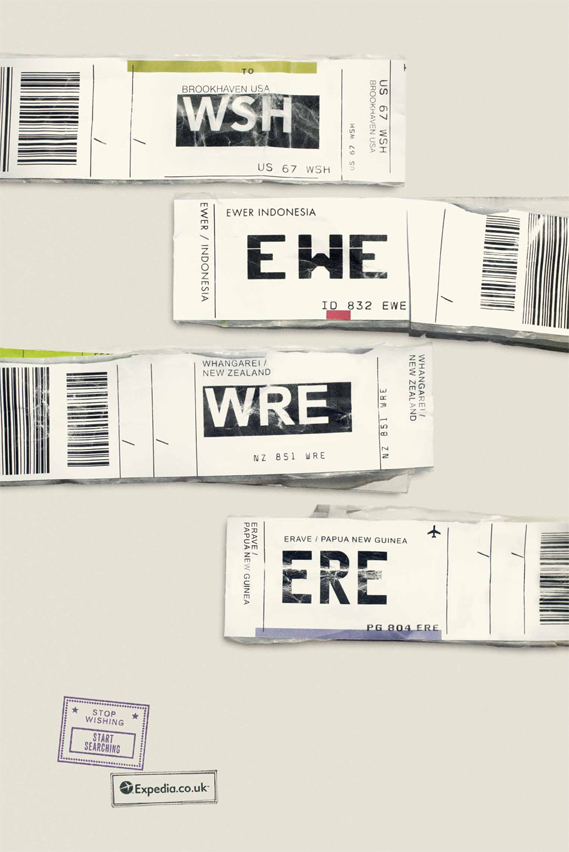
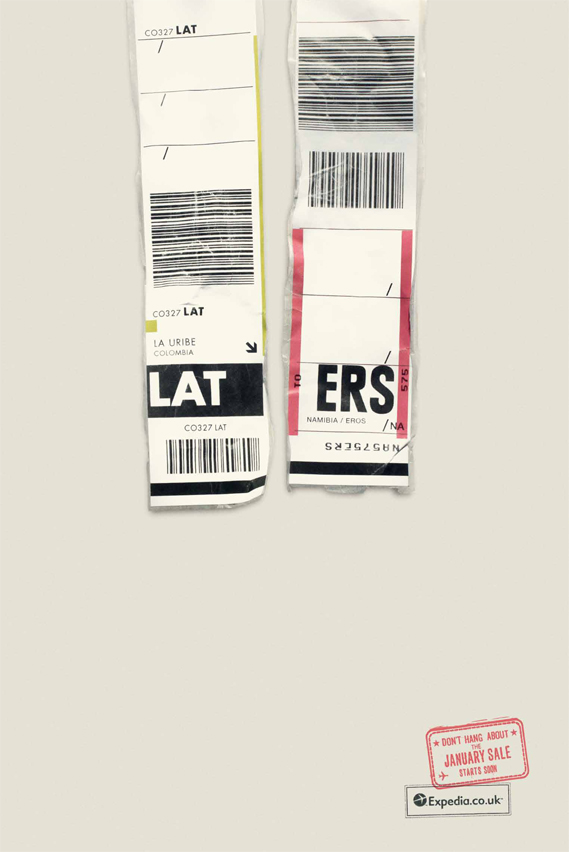
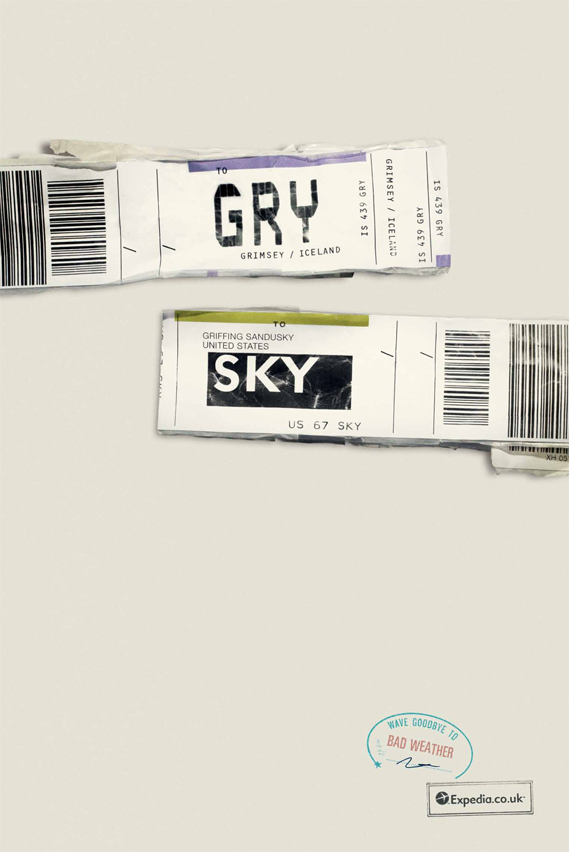
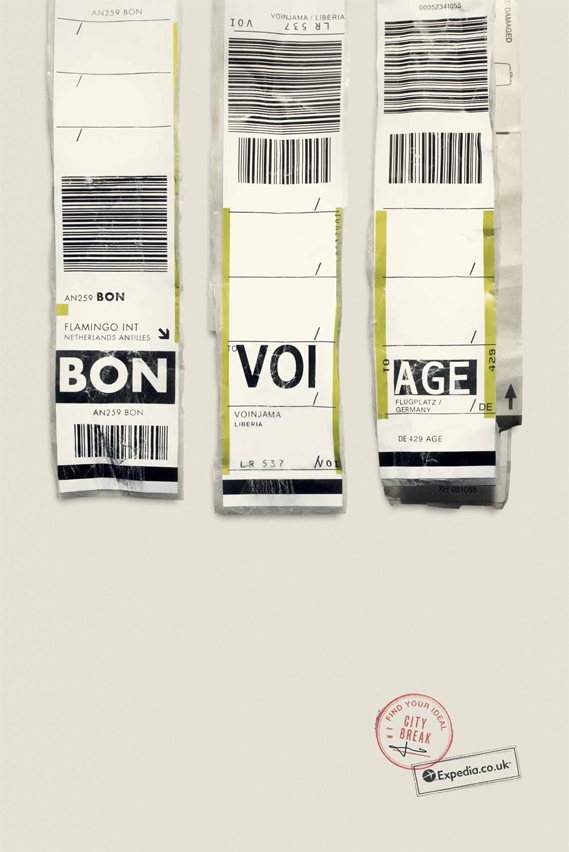
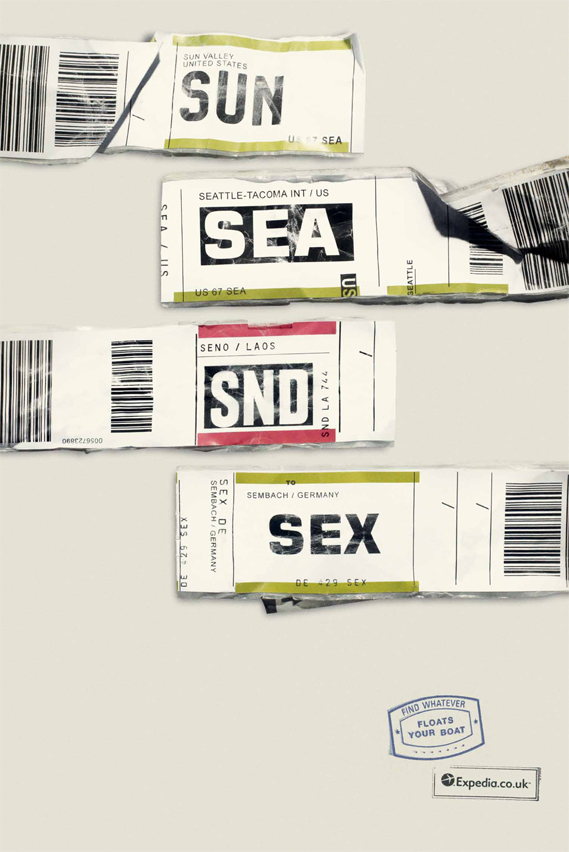
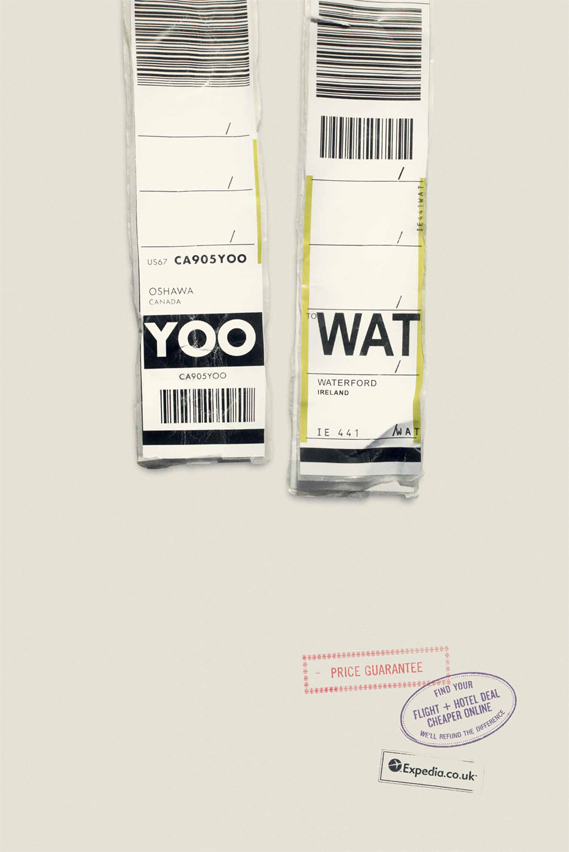
Some ad campaigns are developed based on sound insight and detailed research. Others rely on “the big idea.” Both approaches have merit. Sitting squarely in the “big idea” category is this brilliant new campaign from Ogilvy for Expedia which combined airport IATA codes (the three letter tags they put on your checked bags) into words and phrases.

Of the campaign’s genesis, creative team members Jon Morgan and Mike Watson told Creative Review “It all started when we saw a woman walking through Heathrow with the word FUK hanging from her suitcase. Turned out she’d just flown in from Fukuoka in Japan. That got us thinking, ‘maybe there are more’.”

Using IATA codes from over 9,000 airports around the world, the team selected codes that created half-words and almost-words/phrases such as “SUN SEA SND SEX from airports Sun Valley, Seattle, Seno and Sernbach and WSH EWE WRE ERE from airports Brookhaven, Ewer Indonesia, Whangarei and Erave.

Nine iterations have run so far and more are planned leading up to summer.
expedia8_0.jpg

expedia2_0.jpg

expedia_labels9_0.jpg

expedia_6_0.jpg

expedia_7_0.jpg

expedia1_0.jpg

expedia_5_0.jpg

expedia_4_0.jpg

expedia_3_0.jpg

Picture of Steve Hall

Steve Hall

RECENT ARTICLES

TRENDING AROUND THE WEB

Studies on helicopter parenting link the behavior to parents’ own fear of danger and discomfort with separation, complicating the popular idea that constant helping is simply an extension of love

Studies on helicopter parenting link the behavior to parents’ own fear of danger and discomfort with separation, complicating the popular idea that constant helping is simply an extension of love

Global English Editing

A vocabulary that keeps quietly expanding well past someone’s twenties isn’t just a love of words — it’s the one measure of intelligence psychologists have trusted for a century because it tracks so closely with how a person actually thinks

A vocabulary that keeps quietly expanding well past someone’s twenties isn’t just a love of words — it’s the one measure of intelligence psychologists have trusted for a century because it tracks so closely with how a person actually thinks

Global English Editing

An Adobe survey found 69% of workers say emoji use makes a coworker seem more likable — and the reason has more to do with replacing missing body language than making a message friendlier

An Adobe survey found 69% of workers say emoji use makes a coworker seem more likable — and the reason has more to do with replacing missing body language than making a message friendlier

Global English Editing

A boundary delivered without an explanation usually isn’t coldness — it’s someone who’s learned that the explanation is exactly what invites the negotiation they were trying to avoid

A boundary delivered without an explanation usually isn’t coldness — it’s someone who’s learned that the explanation is exactly what invites the negotiation they were trying to avoid

Global English Editing

Someone who lets a frazzled stranger go ahead of them in line isn’t necessarily being generous — they’re picking up on small shifts in tone and posture that most people only catch when told to look for them

Someone who lets a frazzled stranger go ahead of them in line isn’t necessarily being generous — they’re picking up on small shifts in tone and posture that most people only catch when told to look for them

Global English Editing

The difference between the words you recognize and the words you actually use — and what that gap says about how you learned them

The difference between the words you recognize and the words you actually use — and what that gap says about how you learned them

Global English Editing