AdWeek to Skip Publishing Agency Report Card This Year

adweek_agency_report_card.jpg

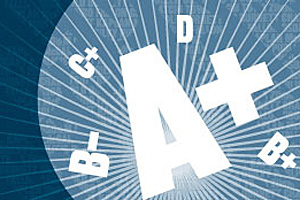
For the first time in 6 years, AdWeek won’t be publishing its Agency Report Card, the annual wankfest (like that, George?) which awards letter grades based on an agency’ performance over the last year. AdWeek editor in Chief Mike Chapman cites the Nielsen’s sales of Adweek and sister properties to e5 Global Media Holdings as the reason.


Picture of Steve Hall

Steve Hall

RECENT ARTICLES

TRENDING AROUND THE WEB

Many adult children remember watching a father work sixty-hour weeks for decades so the family could have what he never did, then watched him die in his sixties without ever prioritizing his own happiness, and now see that same pattern quietly repeating in their own lives, under a different name.

Many adult children remember watching a father work sixty-hour weeks for decades so the family could have what he never did, then watched him die in his sixties without ever prioritizing his own happiness, and now see that same pattern quietly repeating in their own lives, under a different name.

Global English Editing

Harvard researchers had 166 undergraduates rate their own pets on qualities like thoughtful, considerate and sympathetic, and the students who felt most chronically disconnected from other people scored their pets meaningfully higher on exactly those three traits, and no others.

Harvard researchers had 166 undergraduates rate their own pets on qualities like thoughtful, considerate and sympathetic, and the students who felt most chronically disconnected from other people scored their pets meaningfully higher on exactly those three traits, and no others.

Global English Editing

University of Arizona researchers wired 79 people with a recorder sampling conversations every 12.5 minutes for four days and found the happiest had twice as many substantive conversations and a third as much small talk as the unhappiest, suggesting the discomfort was never a social deficit.

University of Arizona researchers wired 79 people with a recorder sampling conversations every 12.5 minutes for four days and found the happiest had twice as many substantive conversations and a third as much small talk as the unhappiest, suggesting the discomfort was never a social deficit.

Global English Editing

A landmark study found that Catholic nuns who wrote sparse, simple autobiographies in their early twenties, when they entered the convent in the 1930s, were far more likely to develop Alzheimer’s disease roughly six decades later, with about 80 percent of the low-complexity writers eventually developing the disease compared to only 10 percent of those whose youthful essays were dense with ideas

A landmark study found that Catholic nuns who wrote sparse, simple autobiographies in their early twenties, when they entered the convent in the 1930s, were far more likely to develop Alzheimer’s disease roughly six decades later, with about 80 percent of the low-complexity writers eventually developing the disease compared to only 10 percent of those whose youthful essays were dense with ideas

Global English Editing

Jordan Peterson opens Rule 6 of “12 Rules for Life” by asking, “If you can’t even clean up your own room, who the hell are you to give advice to the world?” — arguing that the discipline to fix a small mess is the same discipline a marriage, a career, or a country eventually demands.

Jordan Peterson opens Rule 6 of “12 Rules for Life” by asking, “If you can’t even clean up your own room, who the hell are you to give advice to the world?” — arguing that the discipline to fix a small mess is the same discipline a marriage, a career, or a country eventually demands.

Global English Editing

9 habits that give away someone who grew up in a big family

9 habits that give away someone who grew up in a big family

Hack Spirit