

This Olympics-focused editorial series is written by Ronald Urbach, Chairman of law firm Davis & Gilbert LLP and the co-chair of the Advertising, Marketing & Promotions Practice Group at the firm.
It has begun, the Olympics. Even the name sounds grand. For the athletes, it reflects years of overwhelming personal effort and training focused on a singular goal – to win gold. For each country, it’s time to fly the flag and show pride. For London, it’s the moment where they can show off to the world. For the agencies, advertisers, marketers, media, and the people and businesses that live and work in the ad ecosystem, they see the Olympics from their own unique vantage point.
But for me – a lawyer and head of the preeminent law firm in the advertising industry, and someone who has been living and breathing advertising and marketing his entire professional career, I see things through a very different prism. Over the next two weeks, I am going to give you my thoughts on what I am calling, the Olympics of Advertising.
With nearly 1 billion viewers around the world tuning into the Opening Ceremony, I found myself asking, what would Danny Boyle do? Who would have imagined James Bond and the Queen parachuting in to the stadium; David Beckham speed boating up the Thames; the industrial revolution transforming the stage; Peter Pan, William Shakespeare and JK Rowling speaking; children dancing with doctors and nurses of the British National Health Service; the forging of the first Olympic ring; the welding together of the 5 rings in mid-air; and the forming the Olympic torch from hundreds of small torches. How did Great Britain do? As my friends in London say, “Brilliant!”
Watching the commercials that night, I was educated and entertained. I began to understand why Chevy Runs Deep. I learned how Coca Cola, BP and Citi supported our athletes. I saw Olympic athletes enjoying advertiser’s products, LeBron James and McDonald’s. I listened to the Rolling Stones start it up with Omega, the Official Timekeeper of the Olympics. I was reminded how important mothers are by Kellogg’s. I saw a swimmer swim the Atlantic for AT&T. I learned about Dow, Mini, Pizza Hut, GE, Bounty and HP. The Olympics is not just about the best athletes in the world; it is also about the best marketers in the world. But what lessons can agencies and marketers learn from this truly global media and advertising event? Here is my perspective on what we had just seen.
Broadcast – Does the Olympics prove that broadcast is alive and well? Yes. Do the games show the success of multiple media platforms? Yes. Is the 2012 Olympics maximizing social and digital media? Yes. Each media form will argue that its media is the one that best supports the Olympics, as well as other large tent pole advertising events. To me, it proves the point that the most effective media strategy in not a “one” media approach; it is an “all” media approach that will rue the day.
A Marathon Event – Over 40 million people watched NBC’s Opening Ceremony coverage, making it the most watched opening ceremony ever. Many brands stood out on Friday night, but it is way too early to declare winners. Those brands who have the fortitude and budgets to make a mark will come out on top. The lesson here: advertisers who best exploit the fact that the Olympics is a marathon, and not a sprint, have the best chance to win.
Celebrities – We saw plenty of celebrities and competitors in Olympics advertising, like LeBron James and Luol Deng. But the real question is who will be the break out advertising star of the Games? Will there be another 2008 Michael Phelps? Though it is too early to make a final conclusion, it does not appear that there is any one athlete poised to assume that role.
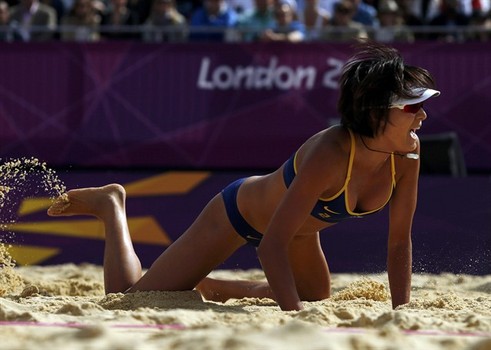
Women – Is the London Olympics the year of the woman athlete? Team USA has 530 athletes and for the first time, the majority of them are women. Preliminary reports show that American women are likely to win more medals than their male counterparts. The hottest ticket at the Games is women’s beach volleyball. There were women athletes appearing for the first time for certain countries. Advertisers must acknowledge and leverage this reality.
Creativity – What about the creative effort reflected by the advertising during the Opening Ceremony? I learned an important lesson early in my career: never criticize the creative. [Ed. Don’t worry. We’ll take care of that for you, Ron] I respect the talent and the abilities of the women and men who work in this industry. I am constantly amazed at what they do and how they do it. The work, as it should, speaks for itself.
At the end of Opening Night, though I was tired, I was excited about the next two weeks. I could engage in my fantasies – winning the race, defeating my opponent, or having my television commercial make it on the Olympics. Pretty cool, huh?
Ronald Urbach is the Chairman of law firm Davis & Gilbert LLP and the co-chair of the Advertising, Marketing & Promotions Practice Group at the firm. His clients include numerous multinational, national, and regional advertising agencies, including those agencies that are viewed as being the top creative agencies in the world. Ron can be reached at rurbach@dglaw.com.












