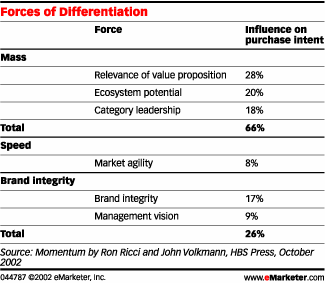
There is an interesting and new brand analysis model reported in eMarketer and put forth by Cisco VP, Ron Ricci in his new book called Momentum. In the book, he posits that the elements of brand value can be linked to the variables in the definition of the physics term: momentum:
Momentum = Mass x Speed x Direction
Breaking this down further and relating it to marketing, the book defines this as:
Brand Mass: relevance of value proposition (the importance of the brand’s promise to its target audience), ecosystem potential (how the product and category help other companies achieve success), category leadership (product’s dominance in a category and how well it solves customers’ problems)
Brand Speed: market agility (how well the company creates/manages fluxes in the market)
Brand Direction: brand integrity (the company’s trustworthiness, how well it follows through on promises), management vision (executives’ skill at making their company impact the market and at evangelizing vision of market’s future)
And in speaking with more then 20,000 customers, Ricci and Volkmann were able to assign levels of importance to each variables and calculate their impact on purchase intent. In the chart to the left, it all comes together.
This model allows the marketer to position themselves against competitors by identifying areas of strength and weakness which provides valuable direction on how marketing can address both the company’s and competitors strengths and weaknesses.Explaining this further, Ricci says:
“If you were sitting over at a Juniper or, say, Gateway versus Dell, it’s more important to know where your competitors are weak on the six forces and then to use that to attack them. What Juniper did so well against Cisco is that on market agility and category leadership, they combined those two and said, “We’re going to show customers that we are ahead of Cisco on the innovation curve.” And for a 12 to 18 month period, they succeeded against it.
He goes on to tell eMarketer that this model provides a vocabulary for aiding in the differentiation of brands. Yes, there are many models out there that have to do with the development of a brand but I find this one an interesting addition to the tool kit.