Pitching is part of an advertising agency’s DNA; it’s often mandatory if an agency wants to acquire new business. With the average length of the client relationship diminishing from eight years in 1997 to only three years today, pitching is occurring more frequently
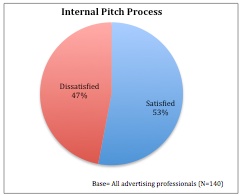
However, according to a Provoke Insights study, approximately half (47%) of advertising professionals surveyed by Provoke Insights say they are dissatisfied with the current internal approach to pitching.
“I hate the pitch process,” one account professional confessed, under anonymity. “It means working 24-7 and completely wears everyone out.” It is not shocking that the industry says unrealistic timelines (66%) and long work hours (65%) are key reasons for such frustration. The demand of pitching is not a new issue; management expects employees to give their sweat and tears.
Yet, can the harried pace of the pitch process be avoided? Surprisingly, employees believe these tiring work conditions can be prevented if better organization and processes were in place. “Very chaotic, no clear direction until the last minute,” a media analyst mentioned when recalling his most recent pitch.
Interestingly, those who are happy with their experiences when pitching mention teamwork as a key reason for their satisfaction. “Good collaboration and clear understanding of a common purpose,” an account executive indicated as success factors.
Another area of frustration during pitches is having timely access to the appropriate research and data. Forty-four percent of advertising professionals stated that if there were better availability of research and data, pitches would run smoother and more successful. More so those who received data for pitches, 48% mentioned the speed of resources was not quick enough.
An agency has one shot to deliver the right message, so research and insights are imperative. Without them, no matter how innovative the creative is, the pitch could be off base. “Winning creative should be based on research and insights. However, many times it ends up being loosely based on not enough research causing the strategy to end up being lack luster,” a strategic planner stated.
Receiving extra support and resources in regards to understanding of the target audience (57%), competitive intelligence (53%) followed by trends analysis (53%), industry intelligence (47%) and social listening (42%) are key areas employees believe the pitch process can be more successful.

This article was written by Provoke Insights Head of Strategy & Research Carly Fink.