
Heavy Clicker’ Profile Will (Probably Laughingly) Deceive You

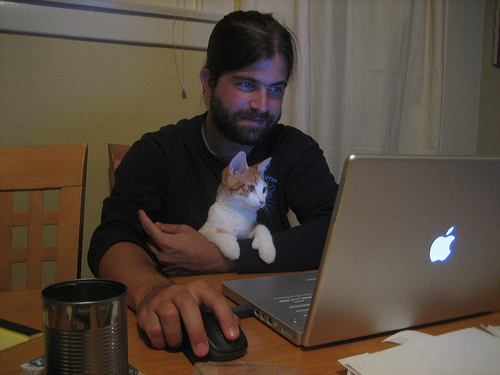
online-geek.jpg

According to a comScore study commissioned by Starcom and TACODA, online ad clicks aren’t as demographically diverse as your deluded CEO thinks.

80 percent of them come from only 16 percent of online users. They are generally young, underpaid and male. You know, like the dev dork of yore.

The people that rack up 80 percent of your clicks are divided into two groups. This is them:

o Heavy clickers (which click on ads four or more times a month) constitute six percent of the online population and make up 50 percent of ad clicks.
o Moderate clickers (which click on ads two or three times a month) are 10 percent of the online population and make up 30 percent of ad clicks.

According to ClickZ, heavy clickers are almost evenly divided between men and women between ages 25 and 44. They generally make below $40,000 and are wont to visit auctions, gambling and career service sites. They spend five times more time online than non-ad-clickers.

Looks like behavioral targeting can’t become the norm soon enough. TACODA must be creaming itself.


Picture of Steve Hall

Steve Hall

RECENT ARTICLES

TRENDING AROUND THE WEB

Harvard researchers had 166 undergraduates rate their own pets on qualities like thoughtful, considerate and sympathetic, and the students who felt most chronically disconnected from other people scored their pets meaningfully higher on exactly those three traits, and no others.

Harvard researchers had 166 undergraduates rate their own pets on qualities like thoughtful, considerate and sympathetic, and the students who felt most chronically disconnected from other people scored their pets meaningfully higher on exactly those three traits, and no others.

Global English Editing

University of Arizona researchers wired 79 people with a recorder sampling conversations every 12.5 minutes for four days and found the happiest had twice as many substantive conversations and a third as much small talk as the unhappiest, suggesting the discomfort was never a social deficit.

University of Arizona researchers wired 79 people with a recorder sampling conversations every 12.5 minutes for four days and found the happiest had twice as many substantive conversations and a third as much small talk as the unhappiest, suggesting the discomfort was never a social deficit.

Global English Editing

A landmark study found that Catholic nuns who wrote sparse, simple autobiographies in their early twenties, when they entered the convent in the 1930s, were far more likely to develop Alzheimer’s disease roughly six decades later, with about 80 percent of the low-complexity writers eventually developing the disease compared to only 10 percent of those whose youthful essays were dense with ideas

A landmark study found that Catholic nuns who wrote sparse, simple autobiographies in their early twenties, when they entered the convent in the 1930s, were far more likely to develop Alzheimer’s disease roughly six decades later, with about 80 percent of the low-complexity writers eventually developing the disease compared to only 10 percent of those whose youthful essays were dense with ideas

Global English Editing

Jordan Peterson opens Rule 6 of “12 Rules for Life” by asking, “If you can’t even clean up your own room, who the hell are you to give advice to the world?” — arguing that the discipline to fix a small mess is the same discipline a marriage, a career, or a country eventually demands.

Jordan Peterson opens Rule 6 of “12 Rules for Life” by asking, “If you can’t even clean up your own room, who the hell are you to give advice to the world?” — arguing that the discipline to fix a small mess is the same discipline a marriage, a career, or a country eventually demands.

Global English Editing

9 habits that give away someone who grew up in a big family

9 habits that give away someone who grew up in a big family

Hack Spirit

Psychologists did not coin emotional intelligence until 1990, and Goleman’s book did not popularize it until 1995, so people raised between 1945 and 1975 grew up with no shared vocabulary for feelings, many still improvising one from watching, guessing, and going quiet when intimacy calls for words.

Psychologists did not coin emotional intelligence until 1990, and Goleman’s book did not popularize it until 1995, so people raised between 1945 and 1975 grew up with no shared vocabulary for feelings, many still improvising one from watching, guessing, and going quiet when intimacy calls for words.

Global English Editing