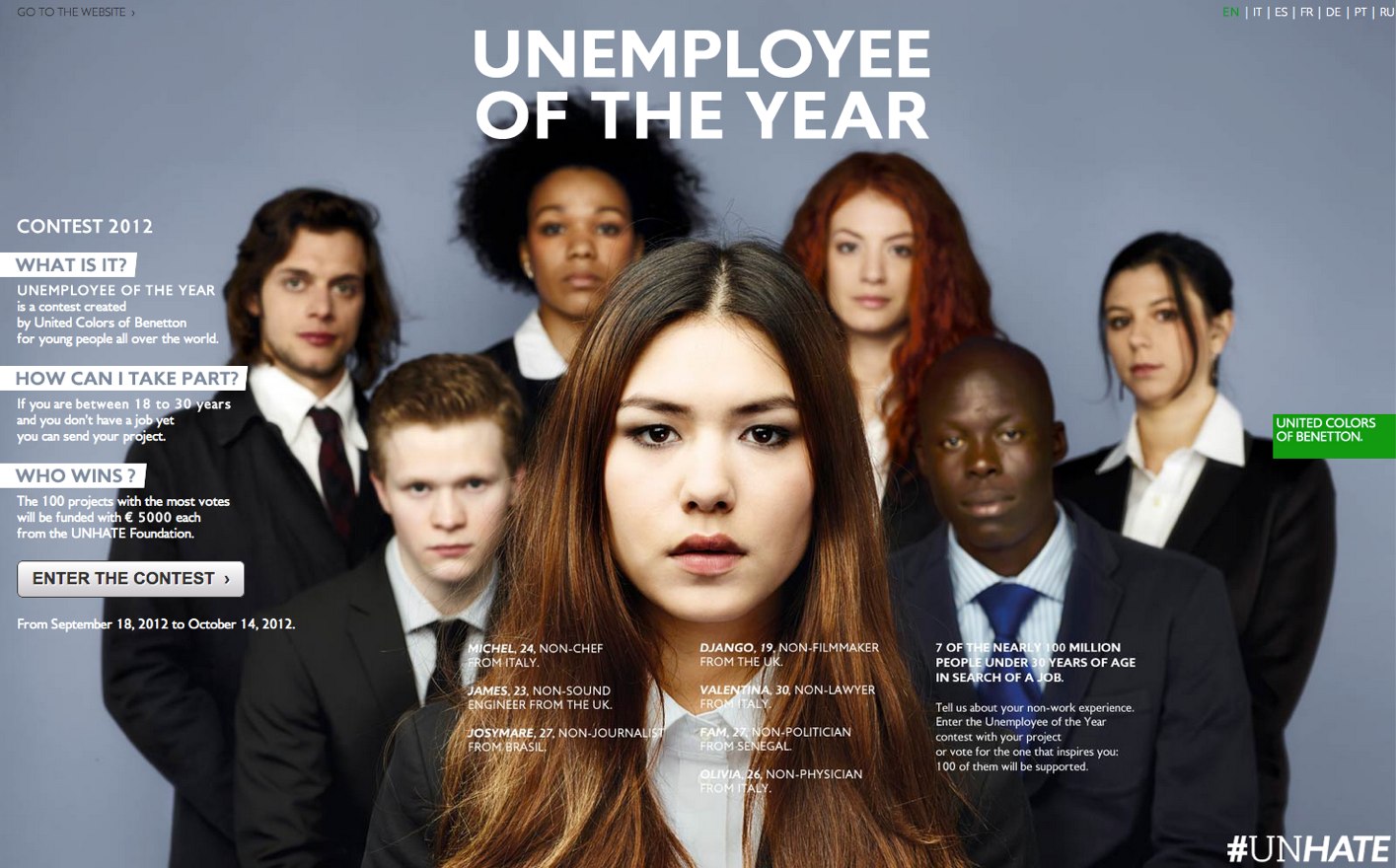
Bennetton Celebrates 15-29 Year Olds With ‘Unemployee of the Year’

bennetton_unhate_unemployee.jpg

Reacting to an economy that left 100 million 15-29 years olds worldwide unemployed, United Colors of Bennetton has launched Unemployee of the Year, a new campaign that aims to dispel the hard to shake stigma that younger workers are lazy and that it’s their own fault they don’t have a job.

Created by Bennetton’s own FABRICA and 72andSunny, the campaign intends to “spark a global conversation” about the plight of Millenials and enable the group to share its stories and experiences.

Of the campaign Benetton Group’s Worldwide Communications Director Gianluca Pastore said, “Benetton is a brand with a point of view: today we call attention to the legacy that previous generations have left this one, and we reflect on the difficulties that people under 30 experience when trying to enter the job market. Social engagement, always a vital and distinctive characteristic of our brand, is a very current value and way of behaving. Since our first Unhate campaign, we’ve made a strategic decision to focus on digital media and put social engagement at the core of our communications. The site unhatefoundation.org will welcome competition entrants, as well as those interested in expressing an opinion on the subject. The worldwide communications plan includes newspapers, magazines, and MTV in 35 countries.”

The campiagn will consist of the website where visitors can create a profile, create an “un-work” resume submit an idea for funding which will net the best 100 ideas €5000 in funding. In addition, a yet to be launched commercial will highlight the lives of four individuals and the projects they are passionate about. And, of course, there will be a print campaign featuring several unemployees of the year.

A piece of advice though. It might help if the images on the campaign site weren’t of insolent-looking, entitlement-seeking types sporting a “fuck you, I’m better than you” grin of self-importance. Just saying.


Picture of Steve Hall

Steve Hall

RECENT ARTICLES

TRENDING AROUND THE WEB

Psychologists explain that people who were never yelled at but always met with silence when they disappointed someone often develop a fear of calm that follows them into every adult relationship. They don’t flinch at anger. They flinch at quiet.

Psychologists explain that people who were never yelled at but always met with silence when they disappointed someone often develop a fear of calm that follows them into every adult relationship. They don’t flinch at anger. They flinch at quiet.

Global English Editing

I’m 73 and I just realized I have no close friends — not because I’m unlikeable, but because I spent forty years being pleasant to everyone and deep with no one, and now I don’t even know how to start

I’m 73 and I just realized I have no close friends — not because I’m unlikeable, but because I spent forty years being pleasant to everyone and deep with no one, and now I don’t even know how to start

Global English Editing

The difference between people who age into bitterness and people who age into warmth often comes down to one thing — Whether they treated happiness as something they deserved or something that grew naturally from how they chose to live each day

The difference between people who age into bitterness and people who age into warmth often comes down to one thing — Whether they treated happiness as something they deserved or something that grew naturally from how they chose to live each day

Global English Editing

The people who seem most at peace in their 60s and 70s didn’t find happiness by searching for it — they built lives where meaning, routine, and genuine connection left room for happiness to show up on its own terms

The people who seem most at peace in their 60s and 70s didn’t find happiness by searching for it — they built lives where meaning, routine, and genuine connection left room for happiness to show up on its own terms

Global English Editing

The generation that grew up in the 1950s and 60s wasn’t given a childhood — they were given a rehearsal for adulthood, handed responsibilities before they had finished being children, and then spent the rest of their lives wondering why they felt robbed of something they couldn’t quite name

The generation that grew up in the 1950s and 60s wasn’t given a childhood — they were given a rehearsal for adulthood, handed responsibilities before they had finished being children, and then spent the rest of their lives wondering why they felt robbed of something they couldn’t quite name

Global English Editing

The real reason boomer women who raised children, worked full-time, and cared for aging parents without complaining now struggle to accept help isn’t pride — it’s that their entire sense of worth was built around being the person who could handle everything, and slowing down feels like becoming irrelevant

The real reason boomer women who raised children, worked full-time, and cared for aging parents without complaining now struggle to accept help isn’t pride — it’s that their entire sense of worth was built around being the person who could handle everything, and slowing down feels like becoming irrelevant

Global English Editing