250,000 Facebook Likes Prove Moms Really Do Need Wine

moms_who_need_wine.jpg

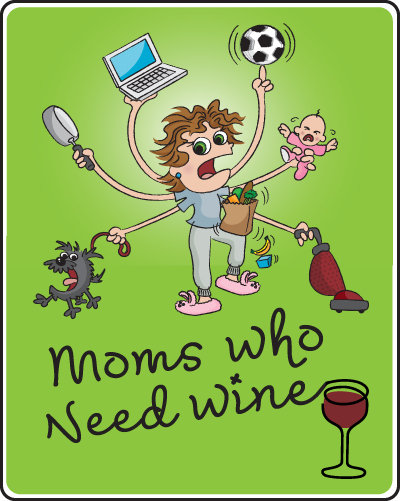
Moms Who Need Wine, a website and fan page started by Boston-based mom (and former agency co-worker of ours) Marile Borden has just seen it’s number of “likes” surpass the 250,000 mark, making it one of the largest online cocktail parties for moms on Facebook.

Second only to Fans of Being a Mom, MWNW’s fan base has surpassed traditional publishers on Facebook, including Parenting.com (27,000), Real Simple (41,000) and O Magazine (21,000). Other metrics are impressive as well with .56% engagement on MWNW over the course of 10 recent posts – compared with fan response on heavy hitter publisher pages such as The New York Times (.036%) and The Huffington Post (.07%).

Borden recognized the growing popularity of Facebook for moms so she put her efforts into a Facebook publishing model as a way to deliver content to her readers, rather than the traditional e-newsletter model she used with her first online venture, Momicillin.com.

In a recent poll, Borden gained several insights about moms and their behavior online:

– 95% of Facebook Moms say visiting Facebook is one of the first two things they do when they go online (38% say it’s the first, 55% say it’s the second)

– 74% of Moms on Facebook log on more than 3x a day

– 7 out of 10 Moms on Facebook spend 1 or more hours a day on the Social Media site, 4 in 10 spend 2 or more hours

Of the site and its growth, Borden says, “It’s not really about the alcohol at all. It’s simply about the validation that motherhood is a tough job, we’re not all perfect, and at the end of the day we need a break.”

Her fans feel the same way as indicated by comments: “It feels good to know that there are other moms out there in the same place that I am! And there is no one there to judge me because I am DYING for a glass of wine after I have spent the day doing a mommy marathon and worked a full time job!!” says one Mom fan.

Another states “[I love] the knowledge that we are not so very different, we moms. Motherhood is motherhood nation to nation. We are more alike that we are different. To discover this, has been so uplifting.”


Picture of Steve Hall

Steve Hall

RECENT ARTICLES

TRENDING AROUND THE WEB

8 things people who give thoughtful gifts pay attention to all year

8 things people who give thoughtful gifts pay attention to all year

Hack Spirit

Greif and Gleason’s 1980 research on how children learn politeness routines found that young children almost never say “please” or “thank you” spontaneously, they say it because a parent prompts them with “what do you say?” dozens of times a week, meaning the reflex adults later display without thinking twice was built through years of someone else’s prompting long before it became automatic.

Greif and Gleason’s 1980 research on how children learn politeness routines found that young children almost never say “please” or “thank you” spontaneously, they say it because a parent prompts them with “what do you say?” dozens of times a week, meaning the reflex adults later display without thinking twice was built through years of someone else’s prompting long before it became automatic.

Global English Editing

8 signs your in-laws see you as their own, not just someone their child married

8 signs your in-laws see you as their own, not just someone their child married

Hack Spirit

Many adult children remember watching a father work sixty-hour weeks for decades so the family could have what he never did, then watched him die in his sixties without ever prioritizing his own happiness, and now see that same pattern quietly repeating in their own lives, under a different name.

Many adult children remember watching a father work sixty-hour weeks for decades so the family could have what he never did, then watched him die in his sixties without ever prioritizing his own happiness, and now see that same pattern quietly repeating in their own lives, under a different name.

Global English Editing

Harvard researchers had 166 undergraduates rate their own pets on qualities like thoughtful, considerate and sympathetic, and the students who felt most chronically disconnected from other people scored their pets meaningfully higher on exactly those three traits, and no others.

Harvard researchers had 166 undergraduates rate their own pets on qualities like thoughtful, considerate and sympathetic, and the students who felt most chronically disconnected from other people scored their pets meaningfully higher on exactly those three traits, and no others.

Global English Editing

University of Arizona researchers wired 79 people with a recorder sampling conversations every 12.5 minutes for four days and found the happiest had twice as many substantive conversations and a third as much small talk as the unhappiest, suggesting the discomfort was never a social deficit.

University of Arizona researchers wired 79 people with a recorder sampling conversations every 12.5 minutes for four days and found the happiest had twice as many substantive conversations and a third as much small talk as the unhappiest, suggesting the discomfort was never a social deficit.

Global English Editing